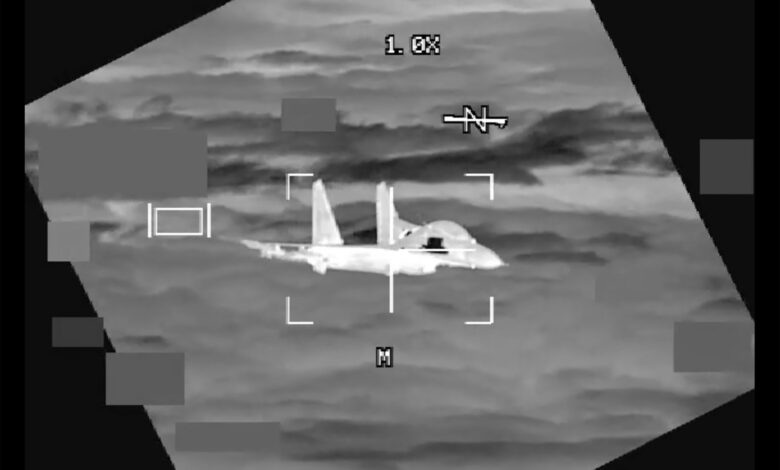
A People’s Liberation Army fighter jet, seen from a U.S. Air Force B-52 aircraft, came within 3 meters of causing a collision with the bomber over the South China Sea on October 24, 2023. IMAGE CREDIT: U.S INDO-PACIFIC COMMAND VIA THE ASSOCIATED PRESS
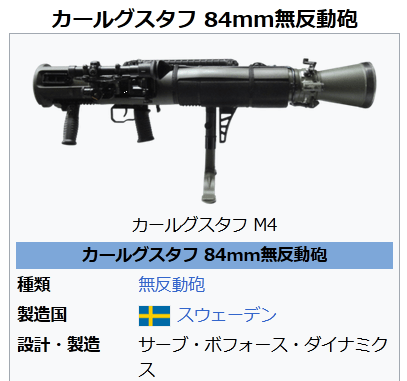
SAAB社公式サイト
    Carl-Gustaf M4 Smart just got smarter (英語)
    Carl-Gustaf M3 The best multi-purpose weapon system there is
    THE 84 MM CARL-GUSTAF MULTI-PURPOSE WEAPON SYSTEM (英語) ※http://products.saabgroup.com/ よりのアーカイブ
GlobalSecurty.org>Multi-Role Anti-Armor/Anti-Personnel Weapon System (MAAWS) (英語)
SMALL ARMS DEFENSE JOURNAL>The New Carl-Gustaf M4: Lighter–Better–Smarter (英語)
Modern Firearms>Carl-Gustaf (英語)
陸上自衛隊>装備>火器・弾薬
EAGLET AC&MILITARY>CarlGustav

表話編歴
※ Marinusは、米海兵隊のドクトリンの過去、現在、未来に関心を持つ退役軍人や元米海兵隊員のグループである。ジョン・F・シュミット(John F. Schmitt)、ブルース・I・グドムンドソン(Bruce I. Gudmundsson)、P.K. ヴァン・ライパー米海兵隊中将(Lt. Gen P.K. Van Riper)、エリック・M・ウォルターズ米海兵隊大佐(Col Eric M. Walters)、ジェームズ・K・ヴァン・ライパー米海兵隊大佐(Col James K. Van Riper)が所属している。(「The Evolution of Maneuver Warfare Theory」-Marine Corps Gazette • September 2022による)
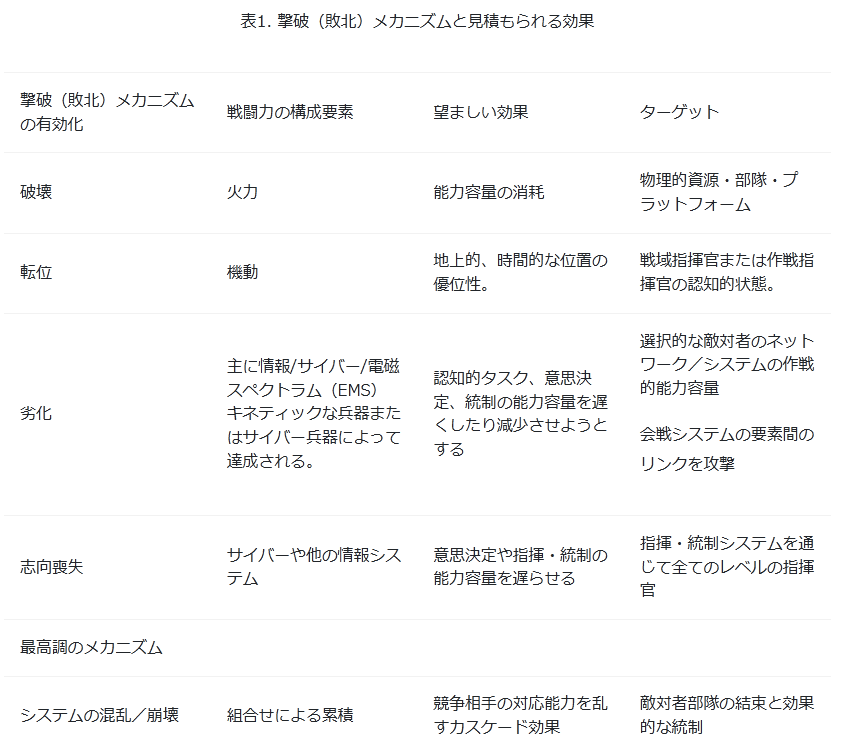
米空軍はまた、競争相手(opponents)に麻痺(paralysis)をもたらすことを強調し、「2035年の統合部隊(joint force)は、複数のアプローチを生み出すためにさまざまな強みを迅速に適用することで、敵対者(adversary)を『複数のジレンマの角(horns of multiple dilemmas)』に立たせるだろう」と指摘している[10]。最新のドクトリンは次のように強調している。
機動戦(maneuver warfare)の擁護者たちは、作戦術のあらゆる疑いのない美徳(positive virtues)を主張し、消耗(attrition)は生兵法(application of raw force)であると非難した。
リチャード・シンプキン(Richard Simpkin)は『スウィフトへの競争(Race to the Swift)』の中で、「消耗の常習者(addicts of attrition)」と「機動の達人(masters of maneuver)」に対する辛辣な一撃で、このコントラストを捉えている[18]。
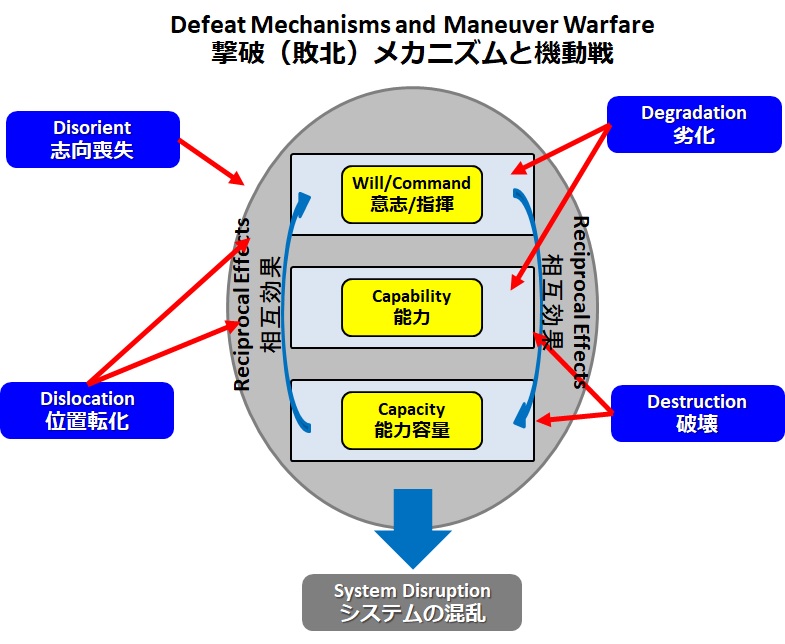
米陸軍は過去にドクトリンで「崩壊(disintegration)」を使用しており、その定義は「(指揮統制手段、インテリジェンス収集、重要なノードなどの)下位の構成要素を破壊する(destroying)または混乱させる(disrupting)ことによって敵(enemy)のシステムの一貫性を破壊し、敵の作戦遂行能力を低下させるとともに、敵(enemy)の能力や闘う意志(will to fight)を急速に崩壊させること」である[24]。
この方が目的をより明確に定義でき、消耗の戦略(strategy of attrition)や長期的憔悴の戦略(strategy of long-term exhaustion)につきまとう時間的次元や歴史的お荷物を避けることができる。消耗とは、物理的な破壊として描かれることが多いが、戦いに必要な要素であることは一般によく知られているが、十分な要素であることはまれである[30]。
機動戦(maneuver warfare)は、紛争の連続体(continuum of conflict)全体にわたって、現代の紛争に対する価値あるアプローチであることに変わりはない。
しかし、まずは単純化しすぎた消耗対機動(attrition vs maneuver)というレッテルを捨てて、現代戦における勝利を達成するための戦闘力の源泉の相互作用を含む、より全体論的なアプローチを受け入れる必要がある。そうすることで、ハリネズミのような考え方を排除することができる。
結局のところ、「我々の行動が敵(enemy)の敗北の引き金になることを考え抜くことが、戦争の術と学(art and science of war)の重要な部分である」というマリナス(Marinus)の意見に、私は強く同意する[46]。 ノート
[1] B.H. Liddell Hart, Strategy, Second Ed, (New York, NY: Praeger Publishers, 1967).
[2] Frank Hoffman, “The Missing Element in Crafting National Strategy: A Theory of Success,” Joint Force Quarterly, (Washington, DC: National Defense University Press, 2d Quarter 2020).
[3] Col Thomas C. Greenwood, USMC (Ret.), “The Elusive Quest for Victory in War,” Proceedings, (Annapolis, MD: U.S. Naval Institute Press, October 2021).
[4] On Theory of Victory, see Brad Roberts, “On Theories of Victory, Red and Blue,” (Livermore, CA: Lawrence Livermore Lab, Center for Global Research, June 2020).
[5] I accept the point raised by Marinus Era Novum, “Continuing the Dialogue, Strategy and Maneuver Warfare,” Marine Corps Gazette, (Quantico, VA: May 2021), that Marine doctrine has to connect strategy to operations. However, I find that Strategy and Campaigning do that satisfactorily across a range of conflicts even if they are nested under MCDP 1.
[6] Marinus, “Defeat Mechanisms,” Marine Corps Gazette, (Quantico, VA: July 2021).
[7] Colin Clark, “General Hyten on the New American Way of War, All Domain Operations,” Breaking Defense, (February 2020), available at https://breakingdefense.com.
[8] Heather Venable, “Paralysis in Peer Conflict? The Material Versus the Mental in 100 Years of Military Thinking,” War on the Rocks, (December 2021), available at https://warontherocks.com.
[9] On air power enthusiasm for strategic paralysis, David S. Fadok, “John Boyd and John Warden, Airpower’s Quest for Strategic Paralysis,” (Maxwell, AL: School of Advanced Airpower Studies, February 1995).
[10] Headquarters Department of the Air Force, Air Force Future Operating Concept, (Washington, DC: 2015).
[11] Air Force Doctrine Publication (AFDP) 3-99, Department of the Air Force Role in Joint All-Domain Operations, Curtis LeMay Center for Doctrine Development and Education, 2020.
[12] Terrence J. O’Shaugnessy, Matthew D. Strohmeyer, and Christopher D. Forrest, “Strategic Shaping: Expanding the Competitive Space,” Joint Force Quarterly, (Washington, DC: National Defense University Press, 3rd Quarter, 2018).
[14] Franz-Stefan Gady, “Manoeuvre versus Attrition in US Military Operations,” Survival, (Milton Park: Taylor and Francis, August/ September 2021).
[15] Michael Kofman, “A Bad Romance : US Operational Concepts Need to Ditch Their Love Affair with Cognitive Paralysis and Make Peace with Attrition,” Modern Warfare Institute, (March 2021), available at https://mwi.usma.edu.
[16] Thaddeus Drake, “The Fantasy of MCDP
1,” Marine Corps Gazette, (Quantico, VA: October 2020).
[17] MAJ Joseph Williams, “Mindlessness in Maneuver Warfare,” Marine Corps Gazette, (Quantico, VA: August 2021)
[18] Richard E. Simpkin, Race to the Swift : Thoughts on Twenty-First Century Warfare, (London: Brassey’s, 2000).
[19] For a thorough examination of attrition in modern warfare see Carter Malkasian, A History of Modern Wars of Attrition, (Westport, CT: Praeger, 2002); and Cathal Nolan, The Allure of Battle: A History of How Wars Have Been Won and Lost, (Oxford: Oxford University Press, 2017).
[20] Craig Tucker, “False Prophets: The Myth of Maneuver Warfare and the Inadequacies of FMFM-1 Warfighting,” (Ft. Leavenworth, KS: Command and Staff College, 1995), Richard D. Hooker, ed. Maneuver Warfare: An Anthology, (Novato, CA: Presidio, 1993); and Wilf Owens, “The Manoeuvre Warfare Fraud,” Small Wars Journal, (September 2008), available at https://smallwarsjournal.com.
[21] Department of the Army, Army Doctrinal Publication 3-0, Operations, (Washington, DC:2019).
[22] U.S. Army, TP 525-3-1, The U.S. Army in Multi-Domain Operations 2028, (Ft. Eustis, VA, Training and Doctrine Command 2018).
[23] GEN James C. McConville, U.S. Army, Army Multi-Domain Transformation Ready to Win in Competition and Conflict Chief of Staff Paper #1, (Washington, DC: Department of the Army, March 2021).
[24] Ibid.
[25] Originally presented in Frank Hoffman, “Defeat Mechanisms in Modern Warfare,” Parameters Vol. 51, no. 4, (Carlisle, PA: Winter, 2021–22).
[26] Headquarters Department of the Army, Field Manual 3-0, Operations, (Washington, DC:2017).
[27] “Defeat Mechanisms.”
[28] UK Army, Land Operations, Army Doctrinal Publication AC71940, (London : March 2017).
[29] There is a difference that some overlook between attrition as a mode/method of warfare, and attrition or firepower as an operational/ combat function. As Venable and Lauterbach noted, the Corps’ new concepts liked EABO reflect an appreciation for the role of destruction in maritime warfare. Heather Venable and LtCol Nate Lauterbach, “Between a Rock and a Hard Place,” Marine Corps Gazette, (Quantico VA: January 2021).
戦いの様式・方法としての消耗(attrition)と、作戦・戦闘機能としての消耗(attrition)や火力(firepower)との間には、見過ごされている違いがある。ベナブル(Venable)とローターバック(Lauterbach)が指摘するように、EABOを好む海兵隊の新しいコンセプトは、海上戦における破壊の役割に対する評価を反映している。Heather Venable and LtCol Nate Lauterbach, “Between a Rock and a Hard Place,” Marine Corps Gazette, (Quantico VA: January 2021).
[30] Huba Wass de Czege, “Army Doctrinal Reform” in Asa Clarke, et al, eds., The Defense Reform Debate: Issues and Analysis, (Baltimore, MD: Johns Hopkins University Press, 1984).
[31] I am using a narrower approach to dislocation than the four (positional, functional, temporal and moral) defined by Robert R. Leonhard, The Art of Maneuver Warfare: Maneuver Warfare Theory and AirLand Battle, (Novata, CA: Presidio, 1991).
[32] John Arquilla and David Ronfeldt, In Athena’s Camp, Preparing for Conflict in the Information Age, (Santa Monica, CA: R AND, 1997)
[33] John Arquilla, Bitskrieg, The New Challenge of Cyberwarfare, (Cambridge, UK: Polity Press, 2021).
[34] On the reciprocal effects of multiple mechanisms, see Eado Hecht, “Defeat Mechanisms, The Rationale Behind the Strategy,” Military Strategy Magazine, (Tel Aviv: IJ Infinity Group, Ltd, 2014).
[35] LtCol Nate Lauterbach and Heather Venable, “Why Attack Weakness, A Reconsideration of Maneuver and Attrition,” Marine Corps Gazette, (Quantico, VA: September 2021).
[36] These concepts are presented in Robert O Work, “A Joint Concept for Systems Warfare,” Center for a New American Security, (December 2020), available at https://www.cnas.org; Bryan Clark, Mosiac Warfare: Exploiting Artificial Intelligence and Autonomous Systems to Implement Decision-Centric Operations, (Washington, DC: Center for Strategic and Budgetary Assessment 2020); Bryan Clark, Dan Patt, and Timothy A. Walton, Implementing Decision-Centric Warfare: Elevating Command and Control to Gain an Optionality Advantage, (Washington, DC: Hudson Institute, 2021).
[37] John Stillion and Bryan Clark, What it Takes to Win: Succeeding in 21st Century Battle Network Competitions, (Washington, DC: Center for Strategic and Budgetary Assessments 2015).
[38] This article focuses more narrowly on systems disruption than Marine doctrine states per MCDP 1.
[39] MCDP 1.
[40] Max Smeets, “A Matter of Time: On the Transitory Nature of Cyberweapons,” Journal of Strategic Studies Vol. 41, no. 1–2, (2018).
[41] On this point, which would be consistent with Boyd, see the chart in Eado Hecht, “Defeat Mechanisms.”
[42] A nod to Col Greenwood’s arguments about the loaded connotations of victory and defeat.
[43] On Boyd’s thinking see Frans Osinga, Science, Strategy and War: The Strategic Theory of John Boyd, (Oxford: Routledge, 2006). On Boyd’s sense of how the elements interact, see Antulio J. Echevarria, Jr., War’s Logic: Strategic Thought and the American Way of War, (New York, NY: Cambridge University Press, 2021).
[44] War’s Logic. See also On Boyd’s impact see Ian T. Brown, A New Conception of War: John Boyd, the U.S. Marines, and Maneuver Warfare, (Quantico, VA: Marine Corps University Press, 2018).
[45] Williamson Murray and Mark Grimsley, “Introduction,” Williamson Murray, MacGregor Knox and Alvin Bernstein, eds., The Making of Strategy, Rulers, States and War, (New York, NY: Cambridge University Press, 1995).



 ジジイがあれこれ考えた