米国は戦略的認知地形をめぐる闘いで交戦しなければならない (JOINT FORCE QUARTERLY)
https://milterm.com/archives/3026
『2023年2月3日 / 最終更新日時 : 2023年2月3日 軍治
MILTERMでは認知戦(cognitive warfare)について、warontherocks.comに掲載された現役自衛官の二つの記事、「新しい技術、新しい概念:中国のAIと認知戦争についての計画 (War on the Rocks)」、「中国の「認知戦」の将来:ウクライナ戦争の教訓 (War on the Rocks)」を紹介し、更にフランスの武官の記事「戦争の前に戦争に勝つ?:認知戦に関するフランス人の視点 (War on the Rocks)」、「神経認知戦:ノン・キネティックな脅威で戦略的インパクトを与える (smallwarsjournal.com)」を紹介してきたところである。ここで紹介するのはNational Defense University Pressが季刊として発行して「Joint Force Quarterly 108」に掲載された「America Must Engage in the Fight for Strategic cognitive terrain」である。この記事は、認知的不協和理論(cognitive dissonance theory) とそれに関連する精神力動的なコンセプト(psychodynamic concepts)を紹介し、社会的知覚(societal perceptions)が比較的容易に操作されることを説明し、これらのコンセプトは、ロシアの戦略的認知地形(strategic cognitive terrain)をめぐる闘いに適用され、ライバルが国家安全保障の狙いを実現するために社会を操作する方法を示すものとしている。知覚操作(perceptual manipulation)がどのように行われるかを理解する一助になると考える。(軍治)』
『米国は戦略的認知地形をめぐる闘いで交戦しなければならない
America Must Engage in the Fight for Strategic cognitive terrain
By Daniel S. Hall
JOINT FORCE QUARTERLY 108
1st Quarter, January 2023
ダニエル・S・ホール(Daniel S. Hall)大佐(米国)は、テキサス州エルパソの北方統合タスク部隊のインテリジェンス部長である。
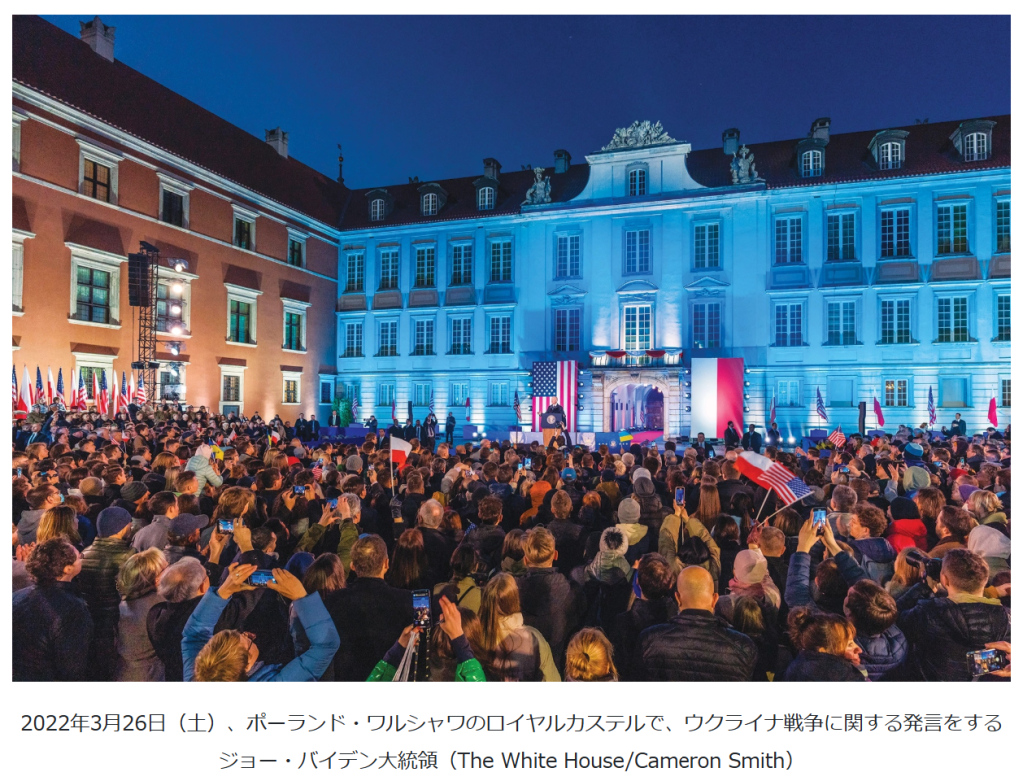
2022年3月26日(土)、ポーランド・ワルシャワのロイヤルカステルで、ウクライナ戦争に関する発言をするジョー・バイデン大統領(The White House/Cameron Smith)
政治的・戦略的到達目標を達成するための非軍事的手段の役割は大きくなり、多くの場合、その効果は武器の力を凌駕している。. . . 情報空間は、敵の潜在的戦闘を低下させる非対称の機会を広く開いている。
-ヴァレリー・ゲラシモフ(Valery Gerasimov)[1]
ロシア軍参謀総長専門家として最も重要な責務のひとつは、将来の武力紛争の問題を明確に考えることである。
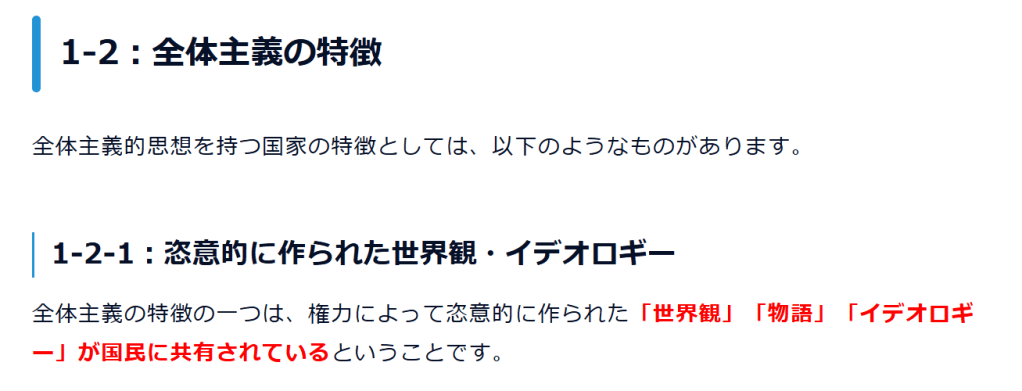
2017年2月、北大西洋条約機構(NATO)戦闘部隊に所属するドイツ兵がリトアニア人少女をレイプしたという噂(rumor)がソーシャル・メディア(social media)で急速に広まった。この疑惑は、第二次世界大戦中のナチスによる占領を直感的に思い起こさせるものだった。
リトアニア政府はレイプはなかったと主張していたが、この根強い噂(rumor)は、ドイツの北大西洋条約機構(NATO)の前方展開強化任務への参加を危うくさせるものだった。
北大西洋条約機構(NATO)は、この噂(rumor)の出所がロシアのプロパガンダであると疑っていた。
北大西洋条約機構(NATO)の司令官たちは、同盟の結束を維持するためには、誤ったナラティブ(false narratives)に対する防御が不可欠であると強調し、噂(rumor)は最終的に鎮静化した[2]。
現代社会は情報が飽和した時代(information-saturated age)であり、操作者(manipulators)は環境要因や人的要因を利用して、真実と虚構の区別を難しくしている。
この冒頭の挿話は、プロパガンダを行う人々(propagandist)が、自分たちの政治的アジェンダを推進するために、これらの要素を利用して情報を武器化する方法の初歩的な例となるものである。
戦略的競争者(strategic competitors)は、米国に対抗するために地政学的関係に対する影響力を求めている。
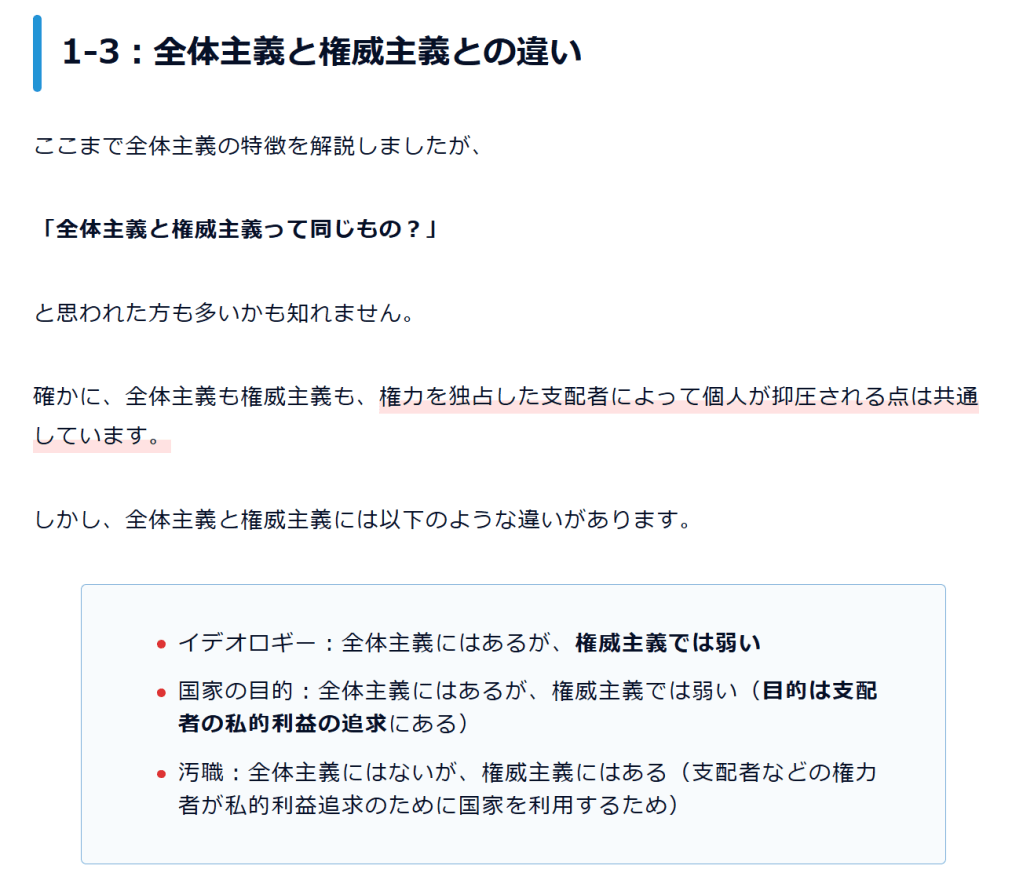
しかし、彼らは一般的に、戦略的狙い(strategic aims)を達成するためには、直接的な軍事衝突はリスクが高すぎると考えている。
したがって、純粋に力によるアプローチ(forceful approach)ではなく、グレー・ゾーン(gray zones)の中で繰り広げられる心理的、イデオロギー的、情報的なアプローチを用いて、米国の覇権を揺るがす機会をうかがうことができる[3]。
グレー・ゾーン(gray zones)という言葉は、一般に戦争と平和の境界線を曖昧にする軍事作戦を連想させる。
しかし、本稿でいうグレー・ゾーン(gray zones)は、心理社会科学の進歩と最先端の情報技術を組み合わせた非軍事的手段の応用であり、西側の抵抗力を削ぐことを意図した心理的屈服戦略(psychological capitulation strategies)のことである。
グレーな競争ゾーン(gray competition zones)を通じた戦略的認知地形(strategic cognitive terrain)の操作は、現代の戦争を特徴づけており、カール・フォン・クラウゼヴィッツの「逆説の三位一体(paradoxical trinity)」のうち人々の「情熱(passion)」の部分に対する攻撃の一例となっている。
クラウゼヴィッツは未完の原稿『戦争論(On War)』の中で、戦争の本質には情熱、偶然性、理性の絶え間ないバランスが必要であることを強調した[4]。
この三位一体(trinity)のバランスが崩れると、大きな戦略的優位性を相手にもたらすことになる。
1968年のテト攻勢で米国の社会的支持(情熱)が失われ、北ベトナムが得た取り返しのつかない心理的勢い(つまり理性)は、逆説的な三位一体(paradoxical trinity)が乱れたときに起こりうる戦略的影響を例示している。
撮影監督ゼップ・アルゲイヤー(Sepp Allgeier)と共に大型カメラを覗く、ドイツ人映画監督レニ・リーフェンシュタール(Leni Riefenstahl)1934年9月5日から8日までニュルンベルクでのナチ党大会で、『意志の勝利(Triumph of the Will)』の撮影中(Everett Collection)
多くの専門家は、相手(opponents)が反西側情報(anti-West information)を紛争の中心に押し上げるため、米国の国家安全保障がますます脅かされていることに同意している[5]。
しかし、米軍が知覚操作(perceptual manipulation)から身を守るための方法について提言している出版物はほとんどない。
自由主義社会は善意の信頼できる情報を重視するため、武器化された情報に軍事的手段で対抗することは問題である。
さらに、政治学者のジョセフ・ナイ(Joseph Nye)は、情報の信頼性は検閲のない批判的な市民社会で栄えるが、政府が助成する情報は「ほとんど信頼できない(rarely credible)」と知覚されると忠告している[6]。
このように、米国は政府がスポンサーとなったイデオロギー的メッセージを嫌うため、脅威のナラティブ(threat narratives)に対抗する軍の能力(military’s ability)に支障をきたしているのである。
敵対者が戦略的認知地形(strategic cognitive terrain)を支配する知覚操作作戦(perceptual manipulation operations)を比較的容易に行うことを考えると、もはや不活動(inaction)は実行可能な選択肢ではない。
そこで、本稿では、国防総省(DOD)が悪意のある情報が蔓延する認知的ギャップを解消するための方法を紹介する。
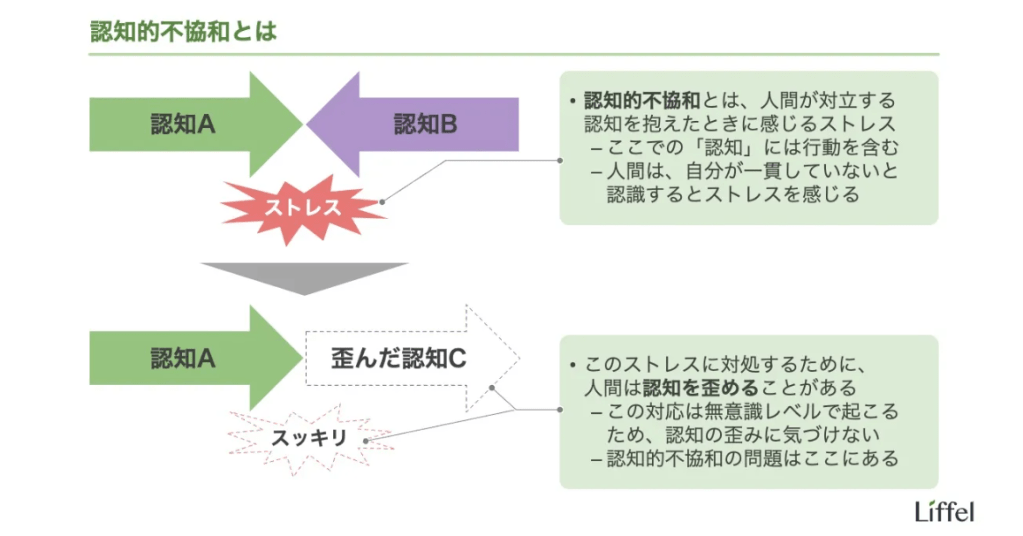
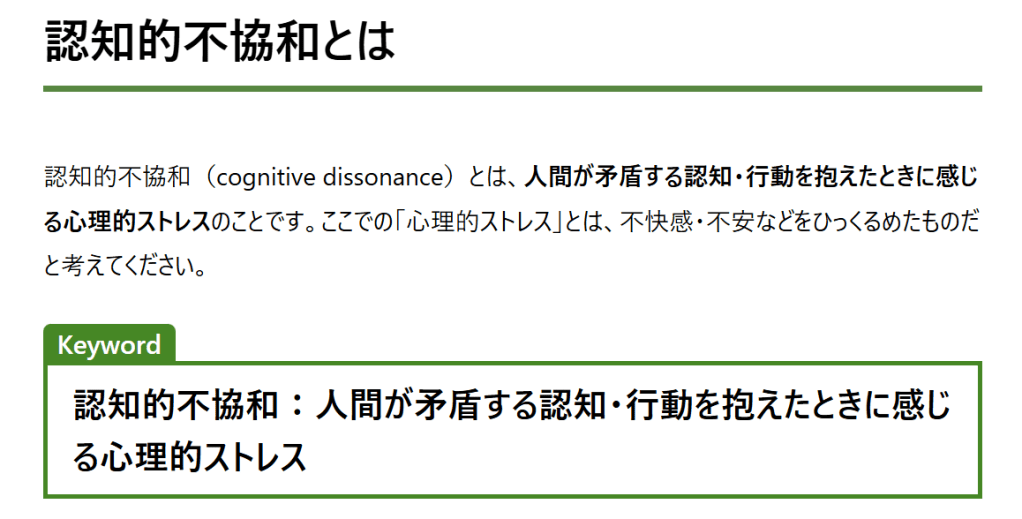
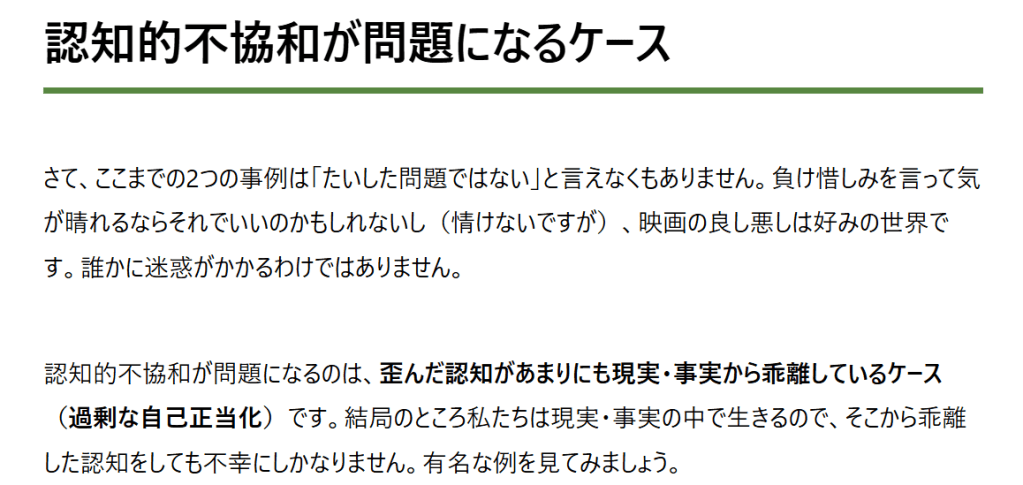
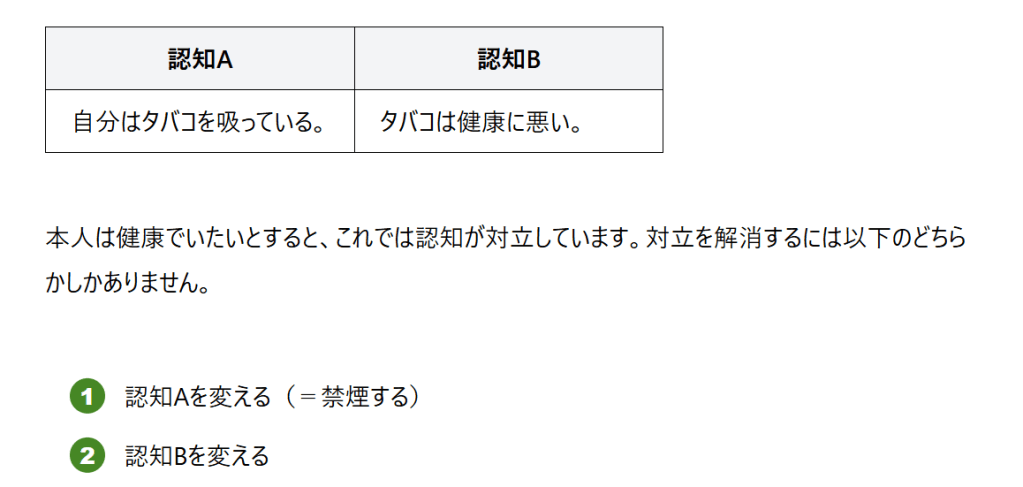
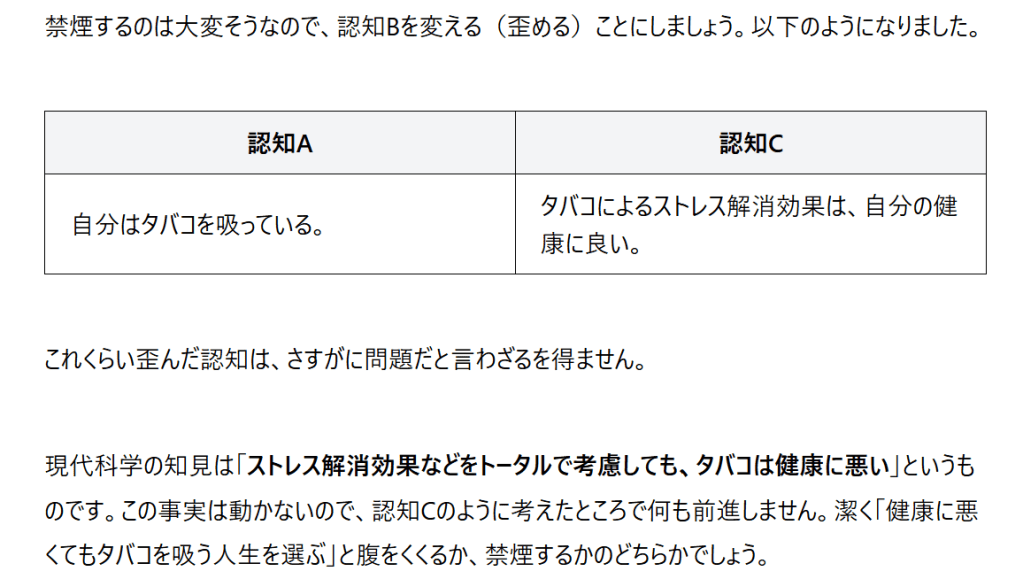
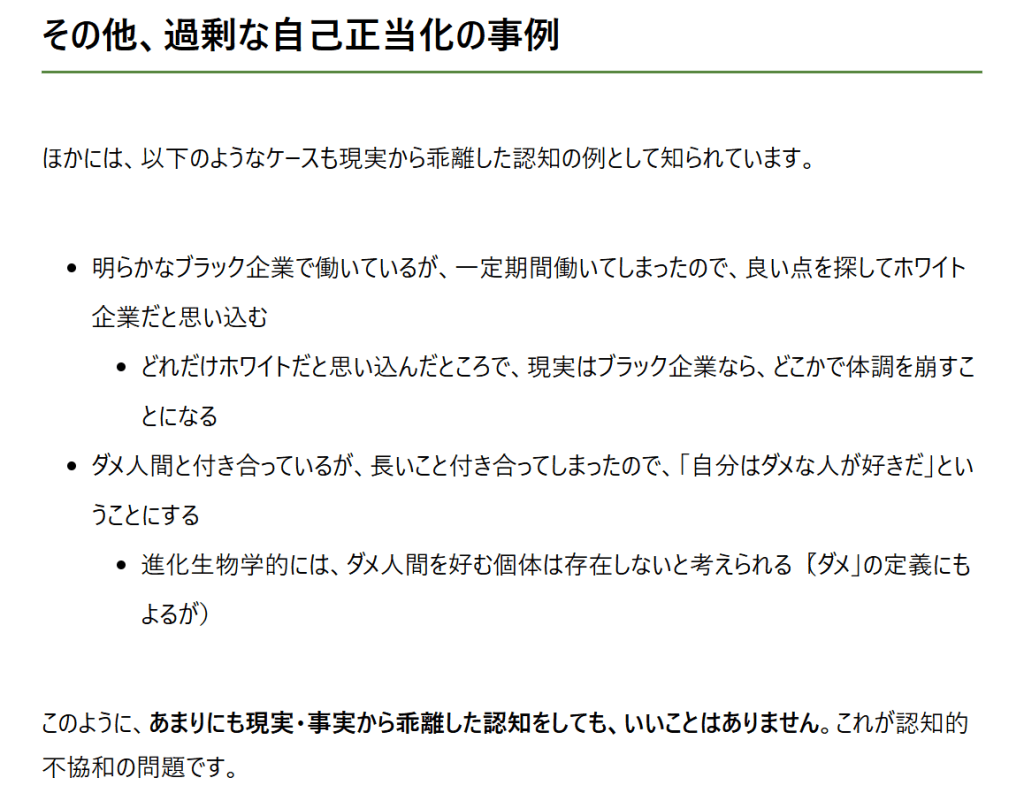
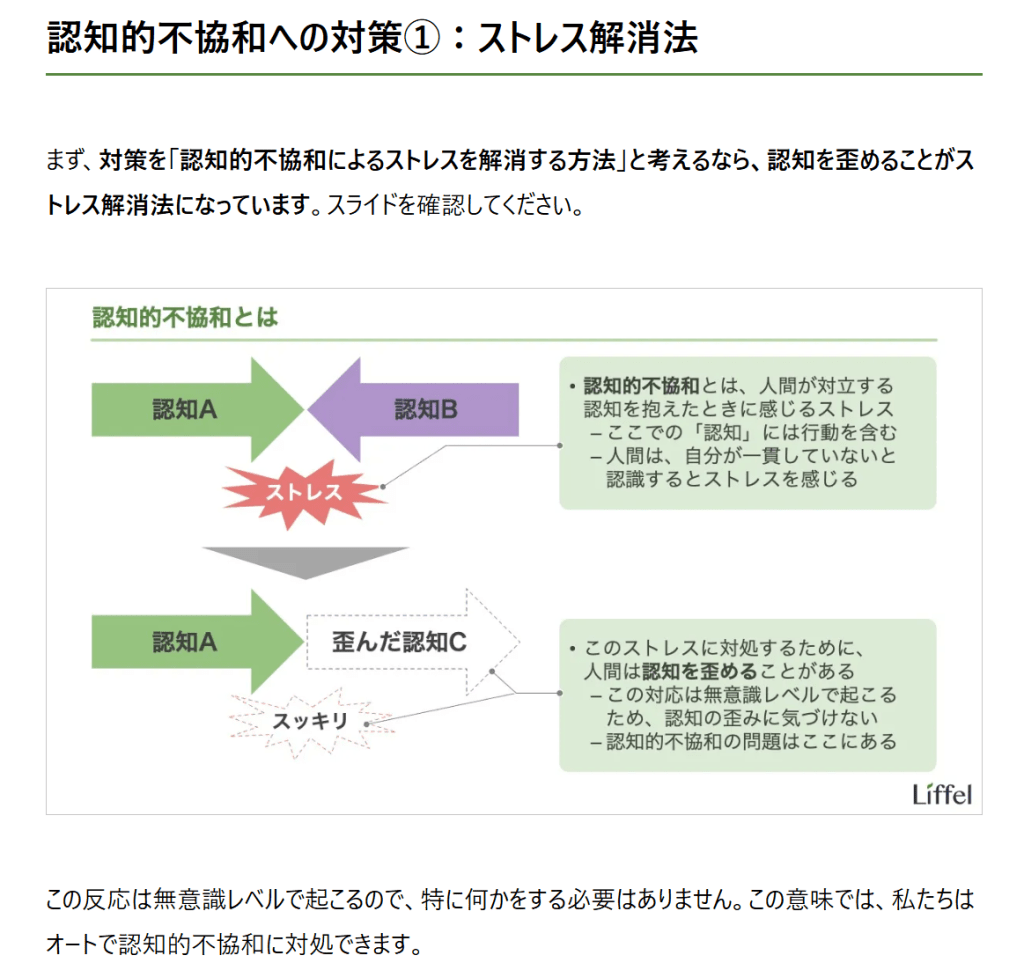
本稿では、認知的不協和理論(cognitive dissonance theory)(※1)とそれに関連する精神力動的なコンセプト(psychodynamic concepts)を紹介し、社会的知覚(societal perceptions)が比較的容易に操作されることを説明する。
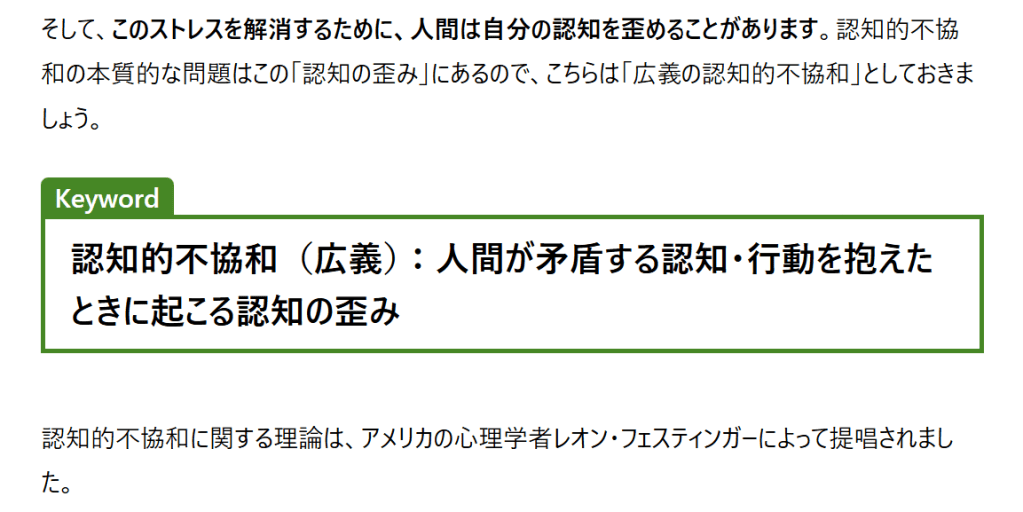
(※1)【訳者註】認知的不協和理論とは、自分の考えと行動が矛盾したときに感じる不安を解消するため、考えを変更することにより行動を「正当化」する現象を説明した理論で、米国の心理学者レオン・フェスティンガーにより提唱された。(引用:https://studyhacker.net/cognitive-dissonance-theory#認知的不協和理論とは)
これらのコンセプトは、ロシアの戦略的認知地形(strategic cognitive terrain)をめぐる闘いに適用され、ライバルが国家安全保障の狙いを実現するために社会を操作する方法を示すものである。
また、米軍が社会の知覚操作(perceptual manipulation)から戦略的認知ドメイン(strategic cognitive domain)を保護するグローバルな一体化した計画を作戦化するための提言も行っている。
プロパガンダの影:Shades of Propaganda
記事「プロパガンダ:言葉で戦争は決められるか?(Propaganda: Can a Word Decide a War?)」デニス・マーフィー(Dennis Murphy)とジェームズ・ホワイト(James White)は、統合参謀本部による「プロパガンダ」の定義を「直接的または間接的にスポンサーを利するために、任意のグループの意見(opinions)、感情(emotions)、態度(attitudes)、または振舞い(behavior)に影響を与えるためにデザインされた国家目標を支援するためのコミュニケーションの任意の形式」[7]と言及している。。
プロパガンダを行う人々(propagandist)は歴史的に、説得力のあるイメージと操作されたナラティブ(manipulated narratives)を組み合わせて、人間の感情を揺さぶってきた。
アドルフ・ヒトラー(Adolf Hitler)のナチス・イデオロギー(Nazi ideology)を正統化することを意図した映画『意志の勝利(Triumph of the Will)』を考えてみると、まばゆいばかりのイメージとメッセージとを結びつけて意見に影響を与える力があることがわかる。
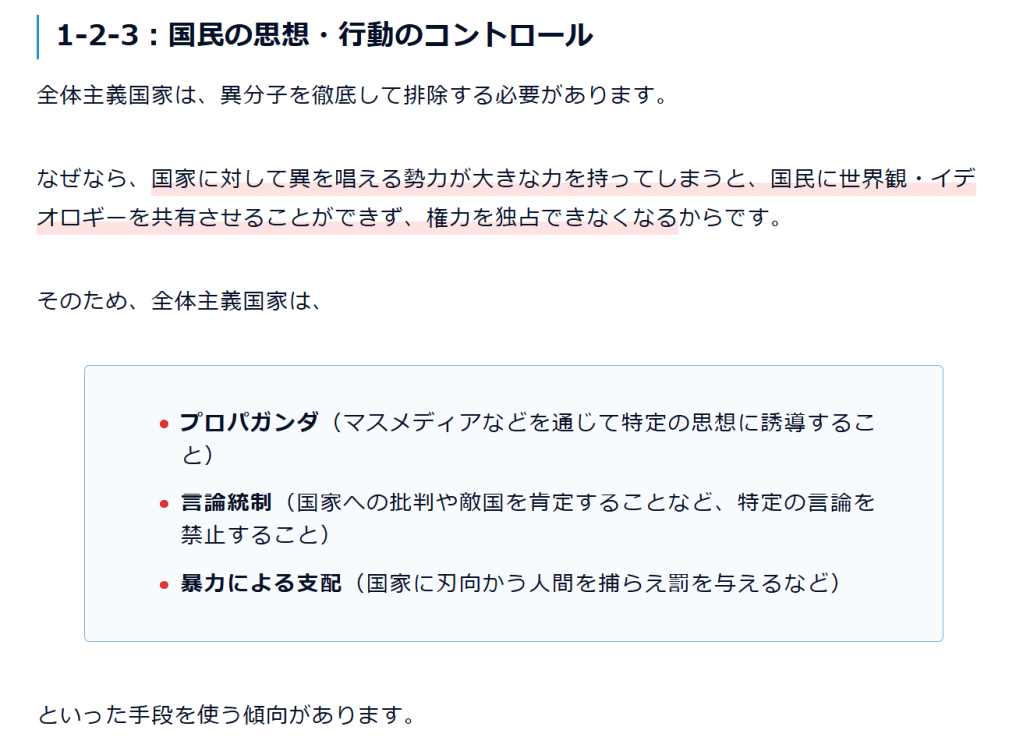
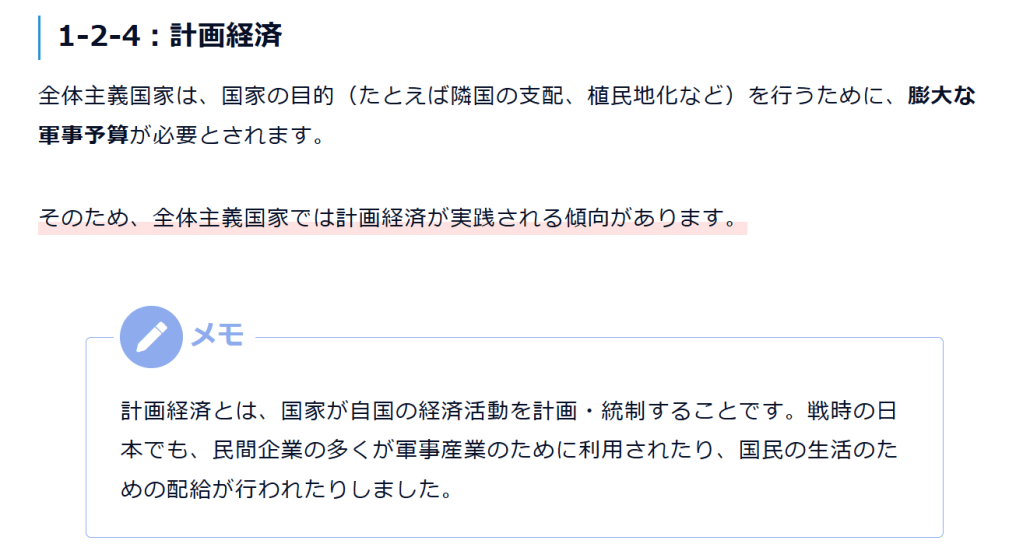
当時、このような広範囲に及ぶプロパガンダ・キャンペーン(propaganda campaign)は、長くて高価な事業であった。
それに対して、現代の通信手段は比較的安価で、魅力的なメッセージを絶え間なく発信することができる。
その結果、現代社会は魅力的な刺激に溢れている。
情報の洪水は、何テラバイトものデータをふるいにかけて、真実を明らかにする断片を特定することをほとんど不可能にしている。
また、個人の性格も影響するため、プロパガンダから国民を守ることは難しい。
現代のコミュニケーションは情報伝達が容易であるため、敵対者がこれまで以上に危険なジャンルのプロパガンダを流す機会を無限に広げている。
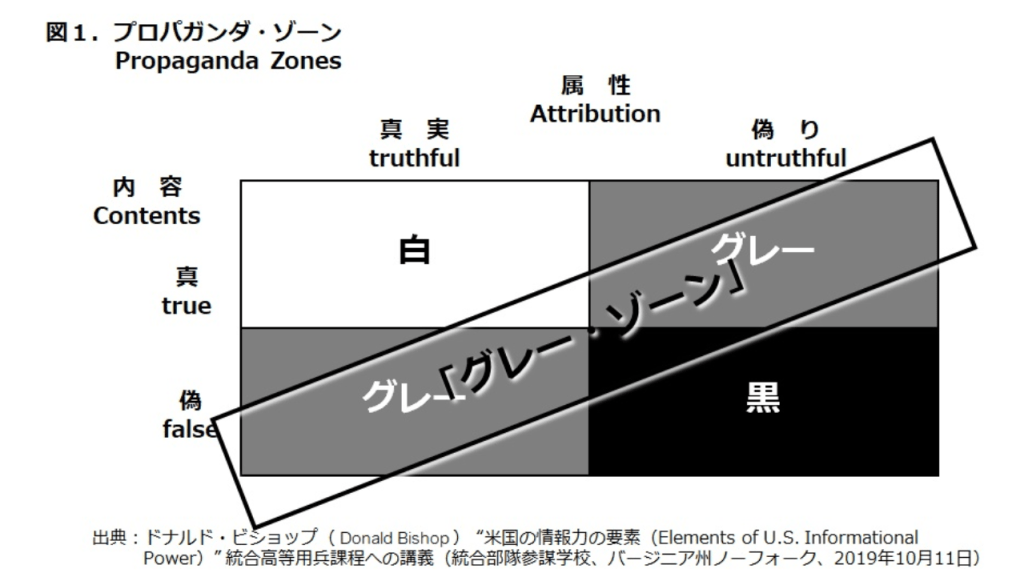
戦略的コミュニケーションの専門家であるドナルド・ビショップ(Donald Bishop)は、人々の個々の情報脆弱性をブラック・ゾーン(black zone)、ホワイト・ゾーン(white zone)、グレー・ゾーン(gray zone)に分類している(図1参照)[8]。
ブラック・ゾーン(black zone)の社会空間には、喜んで騙される人々が住んでいる。彼らは普遍的に受け入れられている説明を拒否するため、信頼できない協力者となり、あらゆる側が容易に彼らを欺くことができる。
また、ホワイト・ゾーン(white zone)にいる人は少数派で、真実を判断する基準が高いため、騙されにくい。
戦略的認知地形(strategic cognitive terrain)の大半はグレー・ゾーン(gray zone)であり、キャッチーな見出しやその他の「クリック・ベイト(click bait)(※2)」に影響され、それに基づいて判断する人々によって占められている。このような情報消費者は、通常、喜んで騙されることはない。
(※2)【訳者註】クリックベイト (英語: Clickbait) とは、ネット上の虚偽・誇大広告の形態の一つで、ネットユーザーの興味を引くような文面のテキストやサムネイル画像を用いてリンクを踏ませ、欺瞞的な内容のコンテンツを読ませたり、見せたり、聞かせたりするものである。
扇情的あるいは誤解を招くような形で提示するのが典型的である。(引用:https://ja.wikipedia.org/wiki/クリックベイト)
しかし、情報が豊富な反面、人間の注意力は非常に限られている。
認知的負荷を軽減するための人間のタスク・シェディング傾向(※3)は、真実を判断するための閾値を低くする。
したがって、グレー・ゾーン(gray zone)のプロパガンダは最も危険なプロパガンダである。なぜなら、これらの時間節約手段は、グレー・ゾーン(gray zone)の人々の判断を誤らせることが多いからである。
(※3)【訳者註】タスク・シェディングとは、特定の条件下で、優先順位の低いタスクの一部を未処理にすることを可能にする組織的慣行である。(http://www.taskmanagementguide.com/glossary/what-is-task-shedding)
グレー・プロパガンダ(gray propaganda)のメカニズムを研究することは、悪用する者(exploiters)がどのように注目を集めるために競争しているかを理解するための基礎を築くために重要である。
不正な情報の出所を偽の出所とするブラック・プロパガンダ(black propaganda)とは異なり、グレー・プロパガンダ(gray propaganda)は半分まことしやかな情報(semi-plausible information)の出所を出所不明で隠してしまうのである[9]。
戦略的競争者(strategic competitors)は通常、世界的に肯定的な意見を求めるので、ブラック・プロパガンダ(black propaganda)の使用は逆効果である。
グレー・プロパガンダ(gray propaganda)は、反証が困難なため、望ましい知覚的効果(perceptual effects)をもたらすのに適している[10] 。
したがって、戦略的競争者(strategic competitors)は、戦略的コミュニケーションの範囲をより広い聴衆に拡大するために、ソーシャル・メディアやマス・メディアに多額の投資を行っている。
情報技術への投資だけでは、自由民主主義体制を不安定にするのに十分ではない。
情報の心理的効力は、戦略的ビジョンを実現するための最も重要な側面である。
したがって、情報作戦(information operations)の成功は、人間の振舞い(behavior)を望ましい知覚的目標(desired perceptual objectives)に向かって刺激するものである[11]。
悪意のある情報キャンペーン(information campaigns)から社会を守るための対プロパガンダ作戦(counterpropaganda operations)を立案する際には、悪用する者(exploiters)が人間の複雑な知覚プロセス(perceptual processes)をどのように操作しているかを理解することが基本となる。
知覚的構成要素の操作:Manipulating Perceptual Constructs
多くの情報専門家は、戦略的競争者(strategic competitors)が社会的知覚(societal perceptions)を紛争の中心へと押しやっていることに同意している[12]。
しかし、競争者がどのようにして政治的目標を達成するために知覚的操作(perceptual manipulation)を成功させることができるかについて説明している出版物はほとんどない。
デニス・マーフィー(Dennis Murphy)とジェームズ・ホワイト(James White)は、「コネクティビティの確保とコンテンツの活用の相乗的バランスを追求し、行動変容(behavioral change)につながる認知的不協和を実現する」ための手段として、認知的不協和理論(cognitive dissonance theory)に触れている[13]。
しかし、彼らは、社会全体の望ましい行動変容(behavioral change)を呼び起こすために、認知的不協和をどのように活用できるかについて、何の洞察も与えていない。
知覚的操作(perceptual manipulation)に関する文献が不完全なため、コミュニケーション専門家のジェス・ネレン(Jess Nerren)は、この理論の再調査を提唱している。
彼女は、「フェイク・ニュースの台頭とメディア・リテラシーの向上が、『認知的不協和と振舞いへの影響(cognitive dissonance and [its] effects on behaviors)』を探る新しい機会を開いた」と書いている[14]。
そこで、本稿では、行動変容(behavioral change)の説明という点で科学的信頼性が指摘されている認知的不協和理論(cognitive dissonance theory)が、操作者(manipulators)が意図した戦略的効果を実現するグレー・プロパガンダ(gray propaganda)をどのように作ることができるかを探るための出発点として有効であることを論じた。
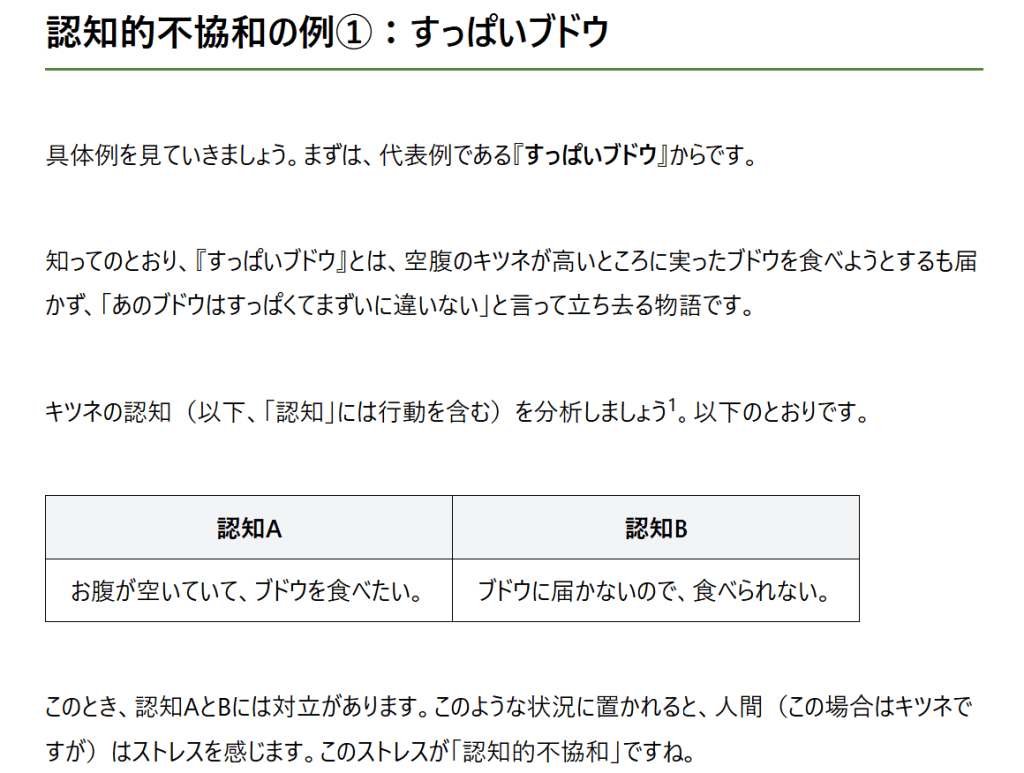
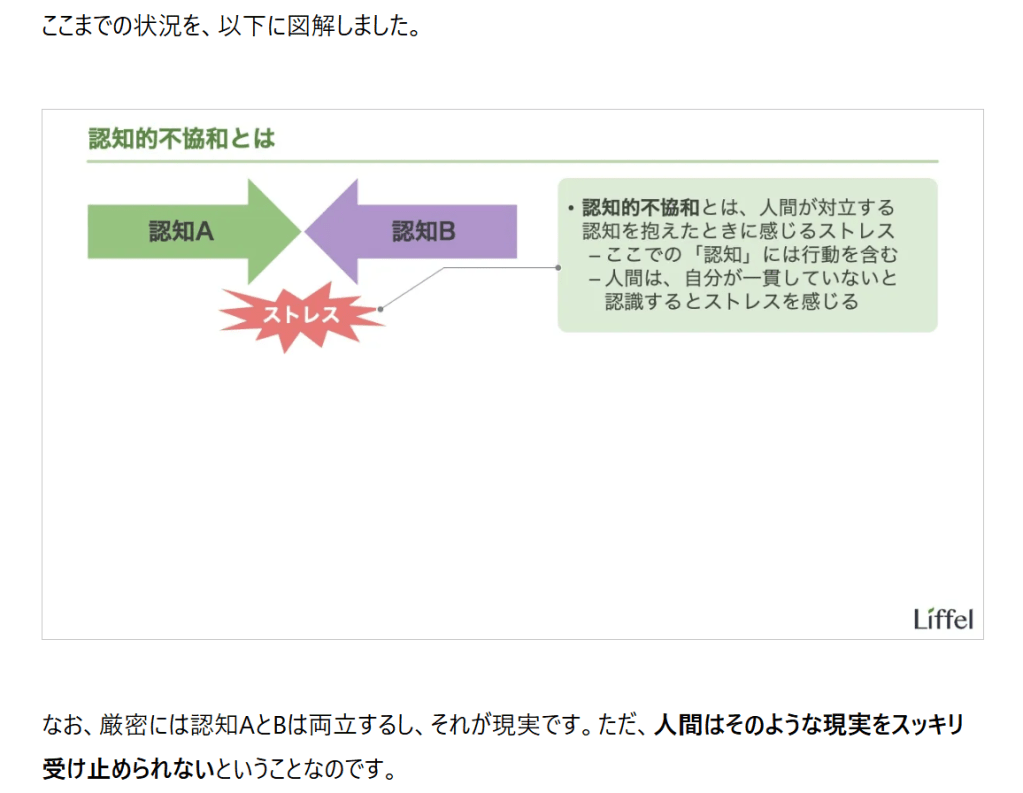
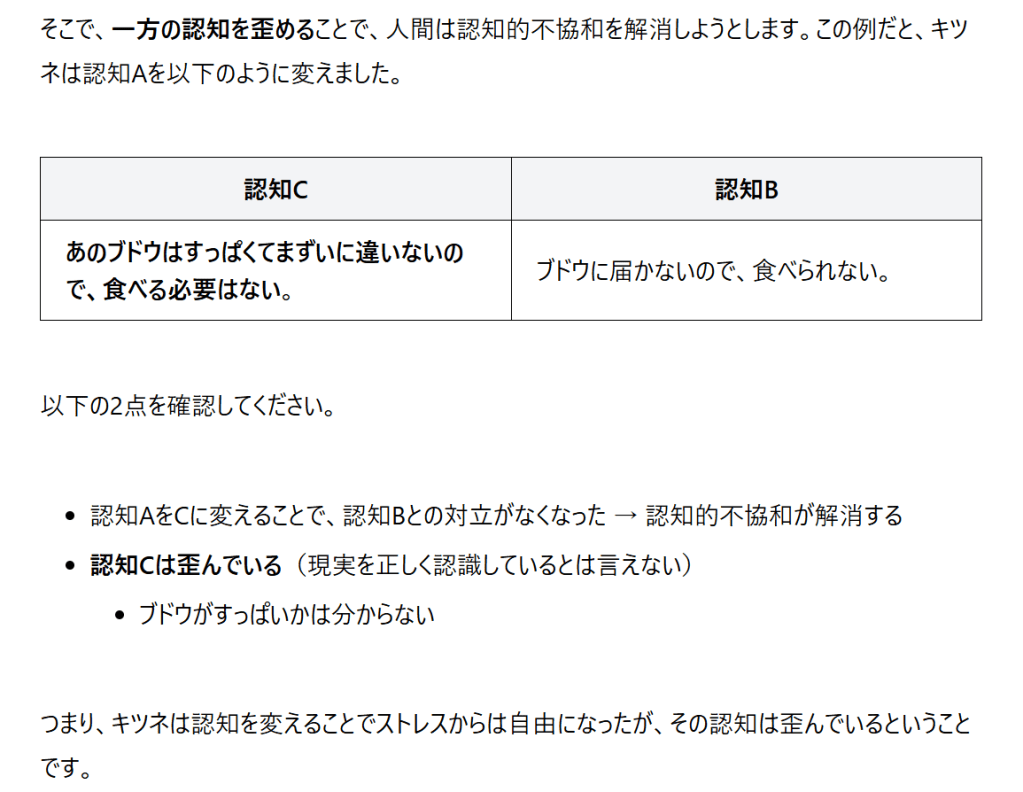
認知とは、人間の知覚(human perception)の構成要素を形成する考え、態度、信念のことである[15]。
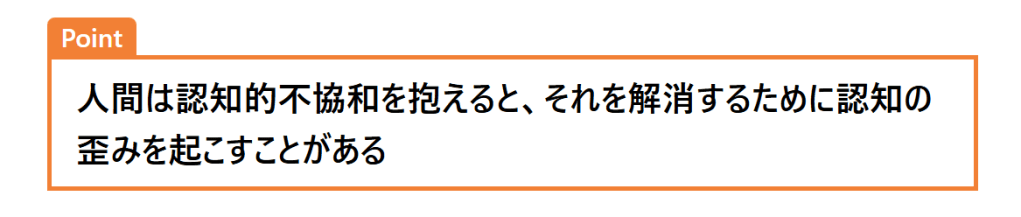
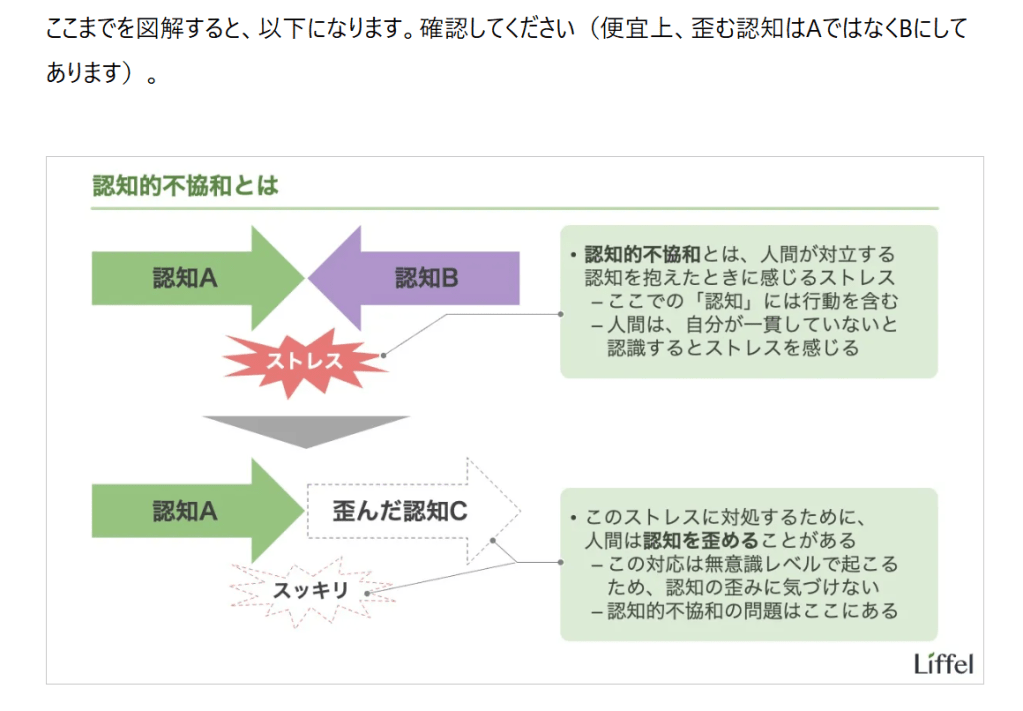
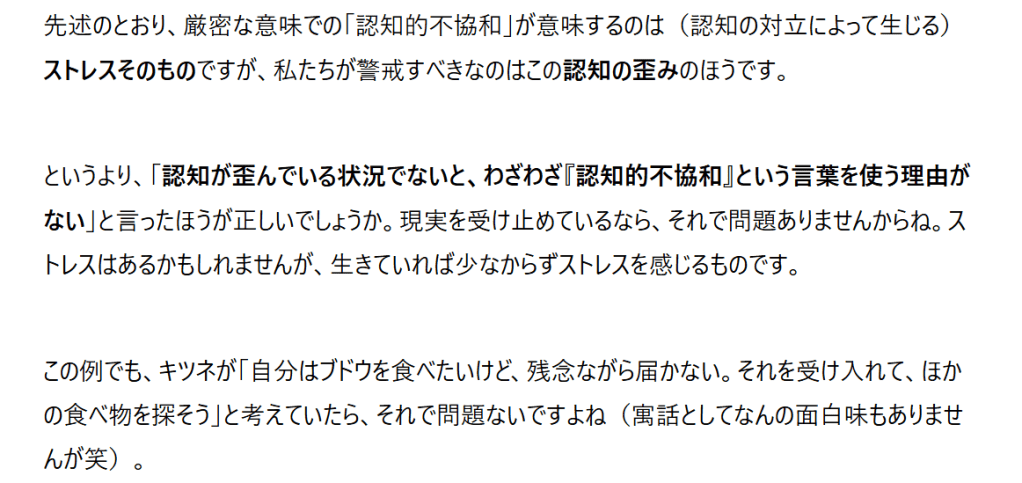
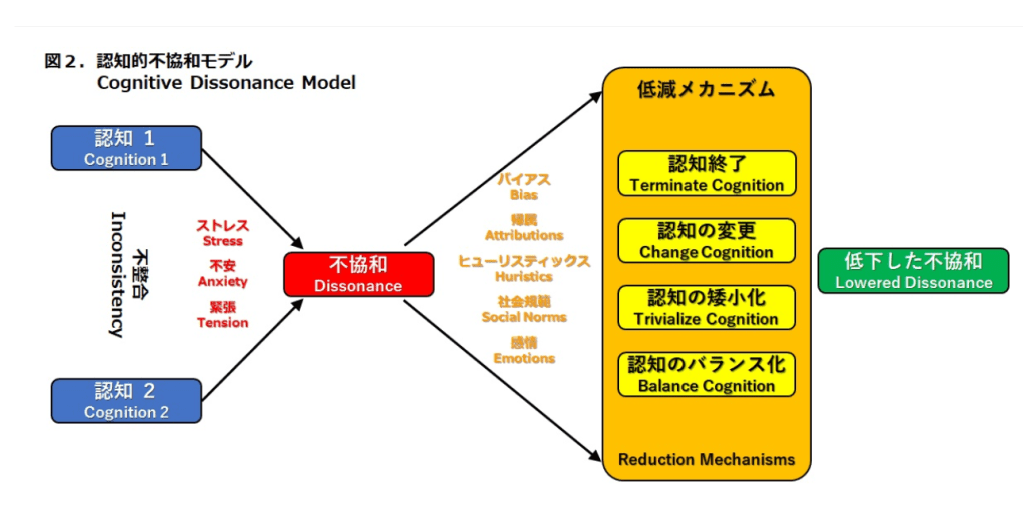
認知理論では、人は認知の間の一貫性を維持しようと努力するとされている。矛盾した認知は不安を引き起こし、それによって人は認知のバランスをとり、内的緊張を和らげようとする[16]。
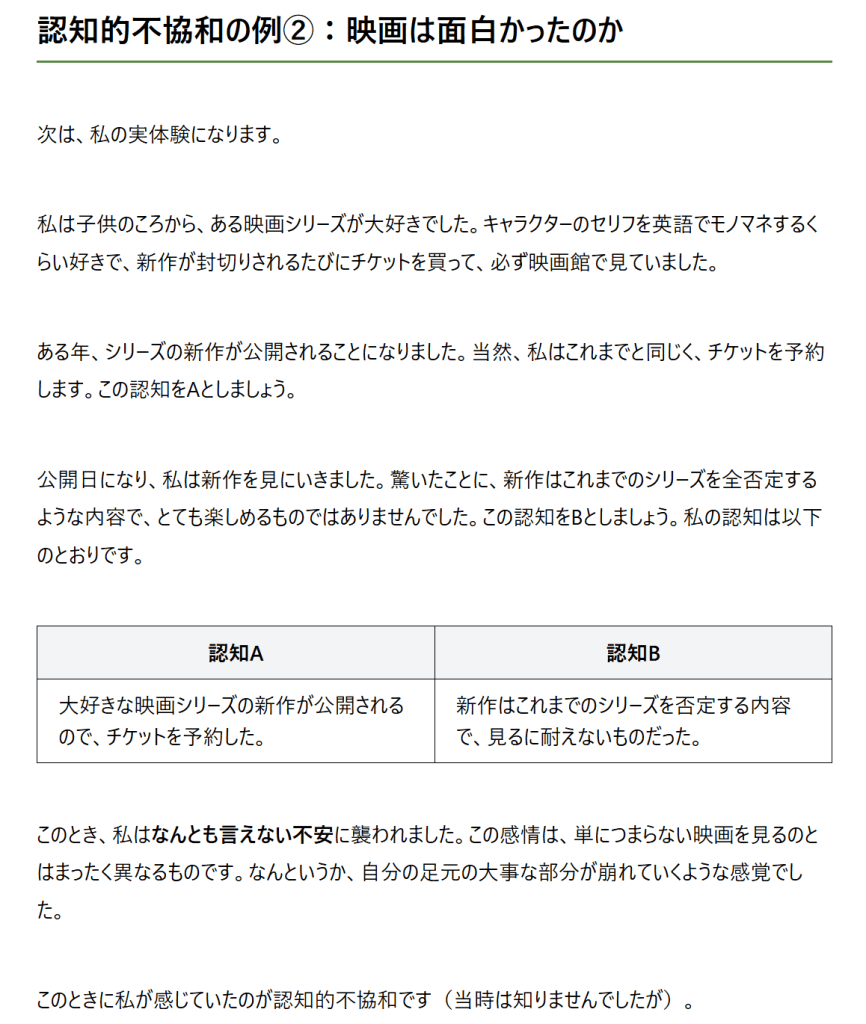
不協和に関する研究によると、交通量の多い道路で車線変更をする際に信号を出さないといった単純な矛盾であっても、人は調和させなければならない不快感を引き起こすことが分かっている[17]。
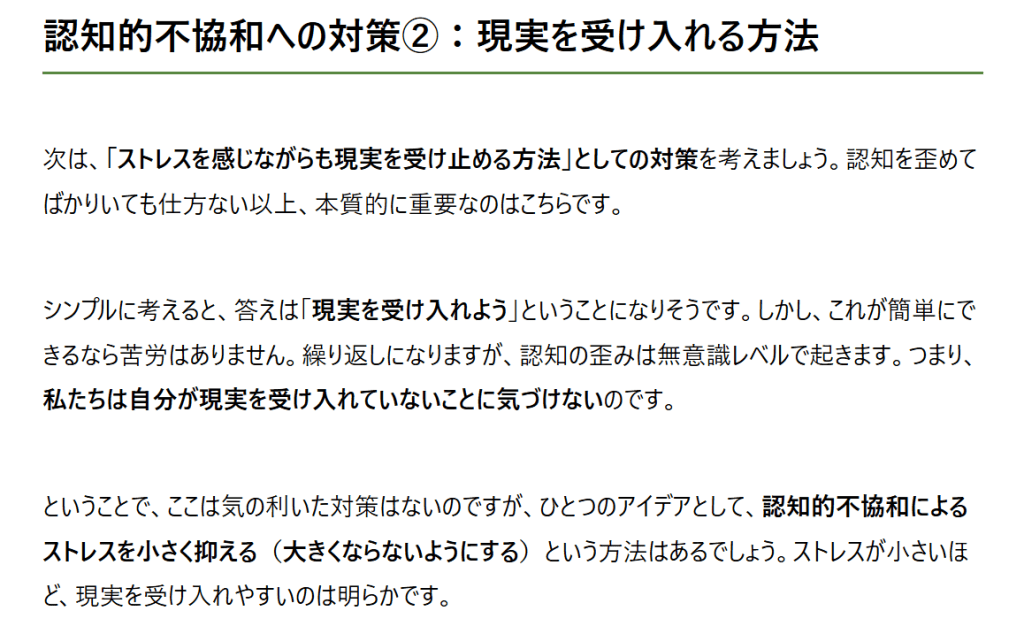
人が不協和を軽減するために利用できるメカニズム(以下、車線変更時の例と組み合わせる)には、以下のようなものがある(図2参照)[18]。
・ 矛盾する認知の終了(車線変更時は必ず合図をする)
・ 新しい認知に一致するように元の認知を変更する(車線変更時に合図しない)
・ 認知の矮小化(車線変更時に合図しない他の人)
・ 認知のバランスをとるための新しい要因を考える(信号を送るためにハンドルから手を離すと、車両の制御が危険にさらされる可能性がある)
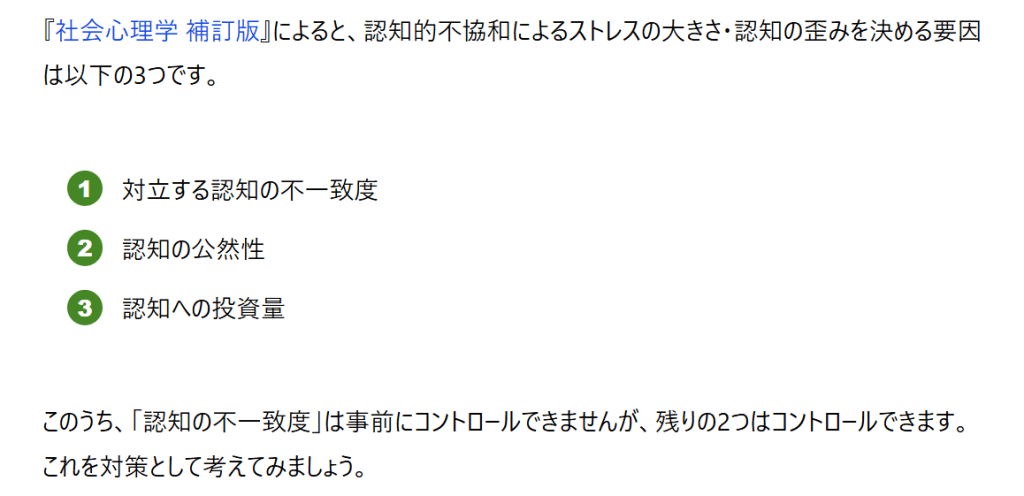
ここで重要なのは、人間が利用できる不協和音の低減メカニズムは、潜在意識下のプロセスであるということです。
自己認識に関する生得的な制限により、人間は極めて操作されやすい。
人間が不協和を解消するために用いる複雑な精神力学的プロセスは、プロパガンダを行う人々(propagandist)に、対立の中心へと知覚(perceptions)を誘導するための手段をいくつか提供している。
信念が人の精神に及ぼす力と、信念を減らすメカニズムがいかに操作されやすいかを理解することは、非常に重要である。
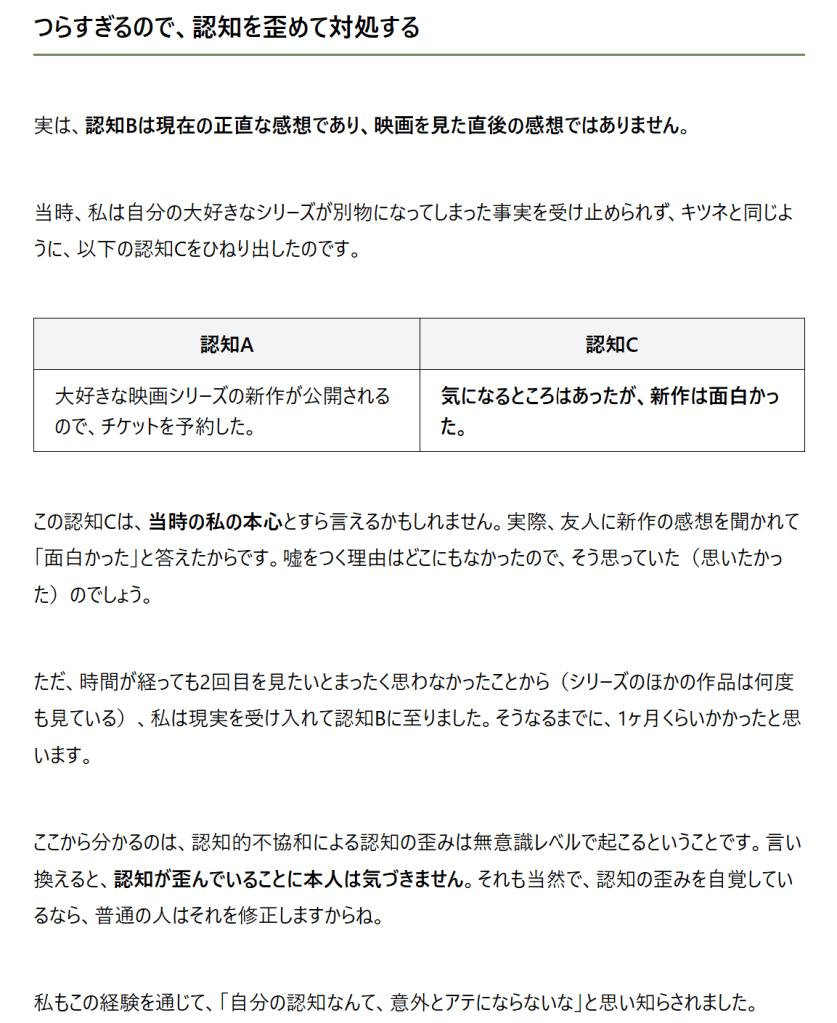
信念が人間の知覚(human perception)に及ぼす持続的な影響は非常に大きく、人は反論のある情報を自動的に排除してしまうし[19]、人間は正しいことを好むので、批判的思考を妨げるヒューリスティックが働いてしまう。
これらの認知的障壁は、自分自身の結論を支持する証拠のみを特定することに力を注ぐというバイアスをもたらす。
悪用する者(exploiters)はこのような人間の傾向を利用して、人々が出来事についてさらにもっともらしい説明を考慮しないように影響を与えるプロパガンダを捏造するのである。
認知的不協和における不安の主要な役割は、感情が知覚的変化(perceptual change)の基本的な力であるとするものである[20]。
強い感情は無視することができないが、弱い感情はすぐに沈静化する。
オンライン・コンテンツの「バイラリティ(virality)」(※4)に関する研究では、怒りや恐怖を引き起こすナラティブ(narratives)は、ポジティブなナラティブ(narratives)よりも速く伝わり、より多くの聴衆に届き、長く続くことが発見された[21]。
(※4)【訳者註】口コミなどで人気が拡散すること
悪用する者(exploiters)は、敵対者の意図に沿うように人々の認知を変化させるために、強い否定的感情を長期にわたって利用するのだ。
冒頭で紹介した、恐ろしい噂(rumor)によってリトアニア国民が最近評判になった国家安全保障政策を嫌がるようになった騒動を思い出してほしい。
人間は不安を嫌うが、人は自分の信念と不一致のある振舞い(behavior)を定期的に起こす。
最近の研究では、仲間集団の社会規範と統制の所在が、人が罪悪感を持たずに不協和な振舞い(dissonant behaviors)をとることを可能にする強力な心理社会的構成要素であることが明らかにされた[22]。
高い外的統制の所在を示す人は、自分自身の行動を他人のせいにする傾向が強い。
さらに、人は対等なグループの社会規範に適合した不協和な行為(dissonant acts)をとりやすくなる。
悪用する者(exploiters)は、人々が矛盾した認知を矮小化し、悪用する者(exploiters)の悪意ある意図を促進する不協和な振舞い(dissonant behaviors)をとるように影響を与える対等なグループの環境を製造する。
さらに、対等なグループが自分の振舞い(behavior)の原因として非難するスケープゴートを割り当てるような環境は、人々が矛盾した認知を矮小化するように仕向けるのに、指数関数的に効果的である。
不協和音の低減操作によって人間の感情を刺激する環境を作り出すプロパガンダを行う人々(propagandist)のフレームワークを理解することは、社会全体がどのように影響を受けて自己破壊的な振舞い(behavior)を取るようになるのかについて理解を深めることになる。
良いニュースは、不協和音の低減操作だけでは、悪用する者(exploiters)は大衆に売れるようなナラティブ(narratives)を作ることはできない。
悪用する者(exploiters)は、認知的不協和やその他の相互に関連する心理社会的構造と説得の術(art of persuasion)を巧みに組み合わせ、望ましい目標に向かって振舞い(behavior)を促進するグレー・プロパガンダ(gray propaganda)を開発しなければならない。
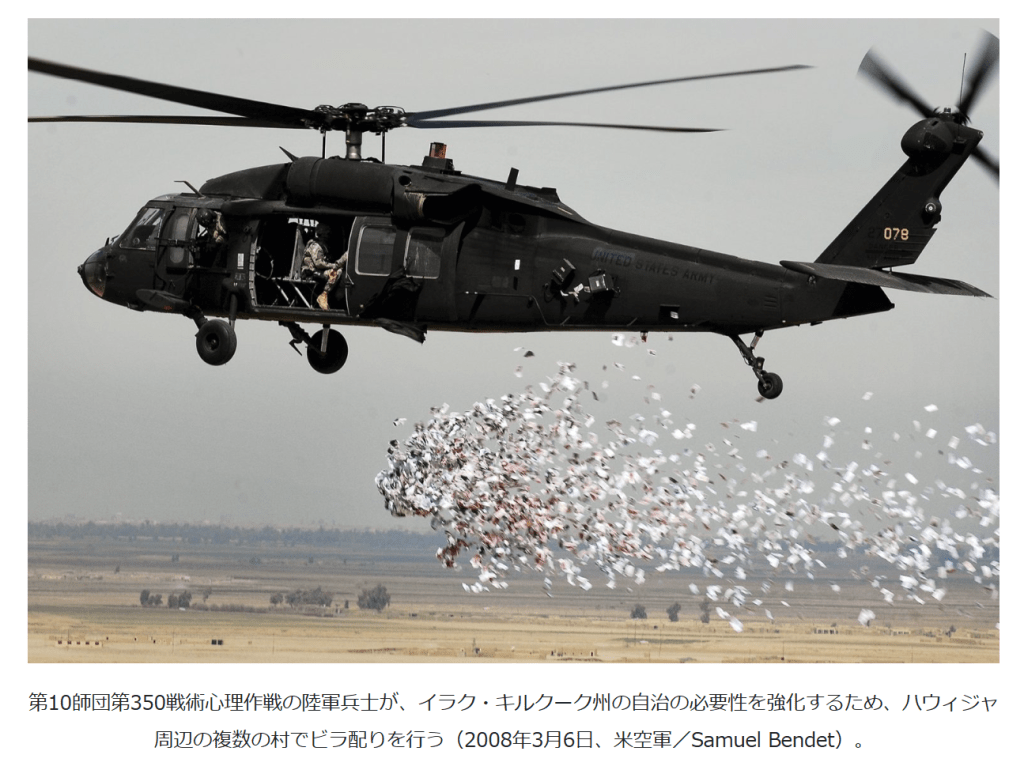
第10師団第350戦術心理作戦の陸軍兵士が、イラク・キルクーク州の自治の必要性を強化するため、ハウィジャ周辺の複数の村でビラ配りを行う(2008年3月6日、米空軍/Samuel Bendet)。
戦略的な聴衆を引きつける:Attracting Strategic Audiences
ジョセフ・ナイ(Joseph Nye)は、政府が統制する情報では、戦略的効果が得られないと主張する。
なぜなら、その情報には偽りがあり、多くの聴衆にとって魅力がないからである。彼は、中国が国際的な聴衆を魅了しようと試みても、その成果は限定的であると主張し、この視点を補強している[23]。
上記のように、グレー・プロパガンダ(gray propaganda)は必ずしも全く真実味がないわけではなく、半信半疑である。
しかし、アジアの地域包括的経済連携が中国の一帯一路の九段線(nine-dash line)を超えた延長を誘うなど、長年の地政学的配置が最近変化していることから、中国のような非対称のナラティブ(narratives)が世界の聴衆に影響を与える可能性があることが示唆されている。
ロバート・チャルディーニ(Robert Cialdini)は、受け手の振舞い(behavior)を送り手の利益になるように意図的に誤解させる非対称なナラティブ(narratives)を「影響力の武器(weapons of influence)」と呼び、「影響力の武器」は説得力があり、人がその魅力的な力に抵抗することは困難であると主張している。
チャルディーニ(Cialdini)は、影響力の武器を作るのは簡単で、心理的な引き金を引くだけで、人間の振舞い(behavior)を意図した知覚的目標(perceptual objectives)に向かって推進させることができるからだと述べている[24]。
このようなとき、心理力学的な構成はプロパガンダを行う人々(propagandist)にとって便利な道具となる。
注目を集め、理解しやすく、受け手の心に響くメッセージに注入されれば、操作された不協和音の低減メカニズムは、情報に対して最も懐疑的な消費者をも説得する影響力のある武器となるのである[25]。
しかし、社会全体の意見を操作するためには、悪用する者(exploiters)は、ターゲットとなる聴衆の文化的・言語的フレームに適合したナラティブ(narratives)をデザインすることが必要である。
世代を超えて受け継がれてきた共通の考え方は、社会的振舞い(behavior)を導くものであり、ある問題に対する統一された視点を集められるような、フリーサイズ(one-size-fits-all)のナラティブ(narratives)を作ることは不可能である[26]。
その結果、ターゲットとする聴衆は、発信者の意図と相反する解釈をすることになり、この変数によって、プロパガンダを行う人々(propagandist)は、聴衆が望ましい知覚(perceptions)を形成するかどうかを計算することが難しくなる。
しかし、クラウゼヴィッツが指摘するように、人々の情熱は、合理的な文化規範に反して社会的な力を働かせることがある[27]。
文化的に適切なナラティブ(narratives)の中に埋め込まれた操作された不協和低減メカニズムは、非合理な社会的傾向を前面に押し出すことができる心理的トリガーを作り出す。こうした力学が、社会がグレー・プロパガンダ(gray propaganda)の犠牲になることを可能にしている。
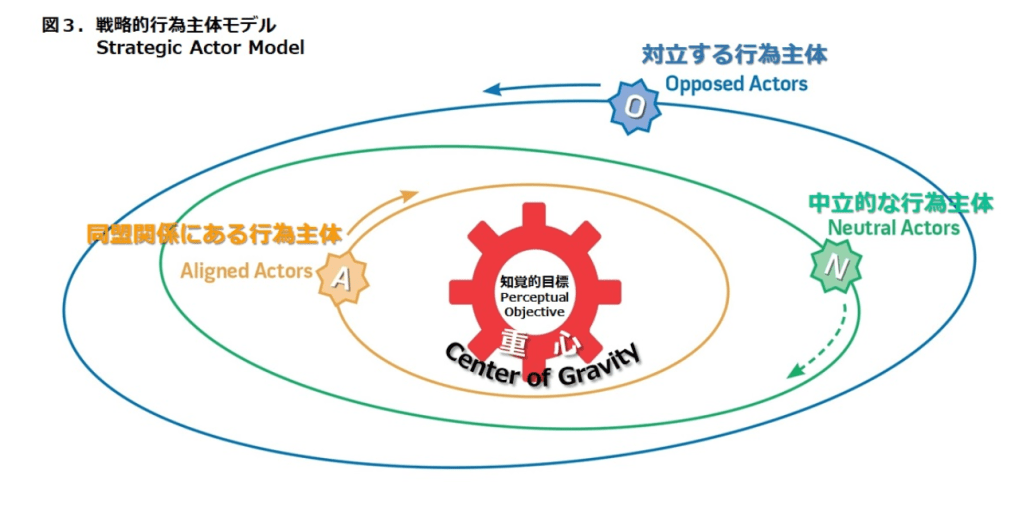
成功するために、敵対者は、明確な知覚の重心(perceptual centers of gravity)を中心に回転する同盟、中立、対立の行為主体に向けて、グレー・プロパガンダ(gray propaganda)を調整する(図3参照)[28]。
同盟関係にある行為主体は、敵対者の外交政策を支持する。
プロパガンダを行う人々(propagandist)は、これらの行為主体を、自分たちの安全保障課題を推進する知覚的目標(perceptual objectives)に向けて推進する。
中立的な行為主体には地政学的な選択肢があるため、プロパガンダを行う人々(propagandist)はより多くのエネルギーを使って、彼らの安全保障アジェンダを拡大するような知覚的目標(perceptual objectives)へと彼らを駆り立てるのである。
同盟者や中立の行為主体の軌道が求心力によって推進されるように作用する傾向があるのに対し、対立する行為主体の不一致は、敵対者の知覚の重心(perceptual centers of gravity)に対して遠心力によって推進されるように作用するのである。
プロパガンダを行う人々(propagandist)は、対立する行為主体の知覚(perceptions)を両価性(ambivalence)の増大に向けて推進するように圧力をかける。
戦略的行為主体を分類する際には、物理的距離よりも心理的距離の方が重要である。
例えば、バルト諸国はロシアと物理的な国境を接しているが、クレムリンの外交政策に反対している。
ロシアが西側の行為主体と対立しているときに北大西洋条約機構(NATO)が対応することを警戒して、ロシア軍参謀総長のヴァレリー・ゲラシモフは、現代の情報ネットワークが非対称的な優位性をもたらし、対立する国家内に恒久的な「遠距離、非接触の行動」を作り出せることを認めている[29]。
したがって、クレムリンがロシアの近海で戦略的認知地形(strategic cognitive terrain)をどのように獲得しているかを探ることは、軍事アナリストにとって、敵対者がどのように心理的屈服戦略(psychological capitulation strategies)を用いるかを検討するためのモデルとなるのである。
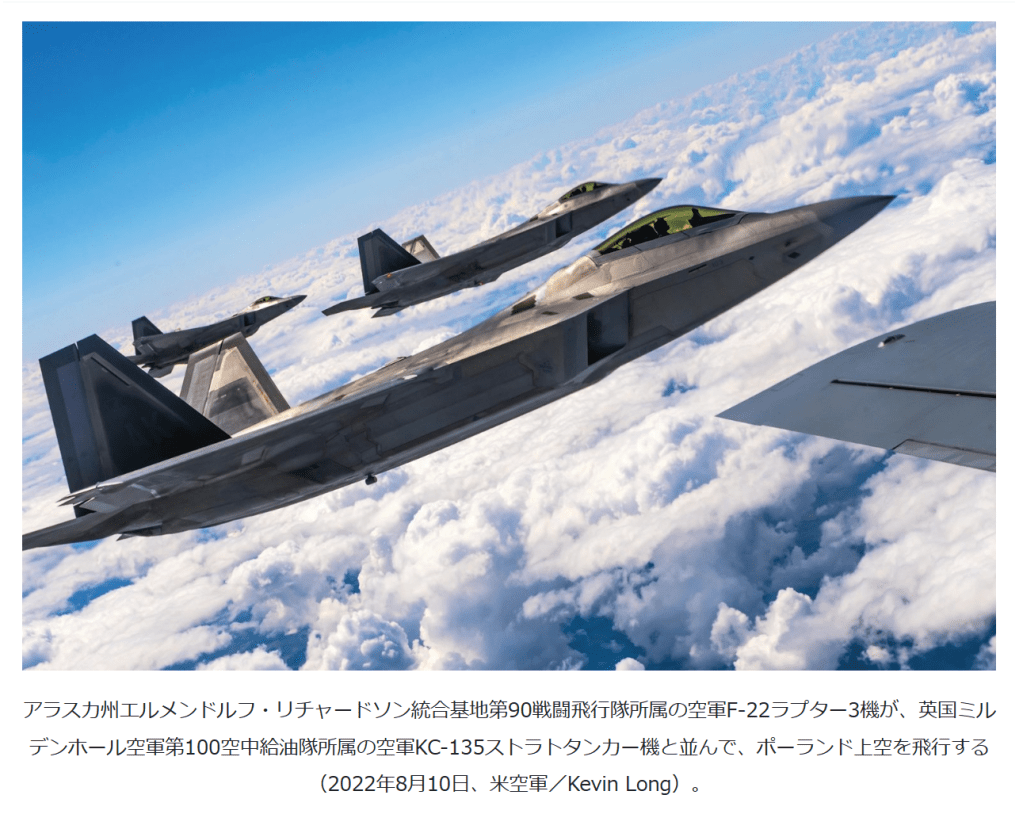
アラスカ州エルメンドルフ・リチャードソン統合基地第90戦闘飛行隊所属の空軍F-22ラプター3機が、英国ミルデンホール空軍第100空中給油隊所属の空軍KC-135ストラトタンカー機と並んで、ポーランド上空を飛行する(2022年8月10日、米空軍/Kevin Long)。
ロシアの戦略的認知地形をめぐる闘い:Russia’s Fight for Strategic cognitive terrain
ロシアの安全保障観は地理によって形成されている。
数々の侵略によって引き起こされた恐怖[30]は、精神分析学者カール・ユング(Carl Jung)の言葉を借りれば、ロシア人の精神の集合的無意識(collective unconscious)に、外部勢力に対する極度のパラノイア(paranoia)(※5)を刻み込んだ。
そのため、国境に沿った影響力のある地域を維持することが、クレムリンの戦略的文化に大きな影響を及ぼしている。
(※5)【訳者註】偏執病、妄想症ともいわれ、頑固な妄想のみをもち続けている状態で、その際に妄想の点を除いた考え方や行動は首尾一貫しているものである。(引用:https://kotobank.jp/word/パラノイア)
北大西洋条約機構(NATO)の拡大や、グルジア(2003年)、ウクライナ(2004年)、キルギス(2005年)のカラー革命に対する米国の支持は、ロシアの周囲に危機の弧が存在するという考えを生んでいる[31]。
このような考え方は、ロシアのパラノイア(paranoia)を強め、安全保障地帯の拡大への欲求を高めている。
ロシアのウラジミール・プーチン(Vladimir Putin)大統領は、危機の弧を安定させることを熱望している。
プーチンの「主権的民主主義」構造は、ロシアの近海における欧米の侵攻に対抗するために特別にデザインされたものである。
プーチンの主権的民主主義構造は、自由民主主義の影響力に対抗するために、経済を完全に統制し、強力な軍隊を維持する友好的な近隣諸国が合併することを想定している[32]。
プーチンの到達目標は、ロシアの国境を確保し、北大西洋条約機構(NATO)を崩壊させることである。
しかし、北大西洋条約機構(NATO)が加盟国防衛の誓約を守ることを確信しているプーチンは、直接的な軍事的対決よりも間接的なアプローチを好んでいる。
2022年2月24日、ロシア軍がウクライナでいわゆる「特別軍事作戦」を開始したことは、プーチンのビジョンをクレムリンが作戦実行(operationalization)に移したことを示す例である。
ウクライナへの侵攻は、結局のところ、プーチンが北大西洋条約機構(NATO)の継続的な侵攻に対して最も脆弱な地域であると知覚している地域を、彼の海外に近い場所で確保することを目指すと同時に、北大西洋条約機構(NATO)の結束とロシアの安全保障目標に対抗する西側の意志を試す情報キャンペーン(information campaigns)を採用したものである。
2013年、ゲラシモフは国家機関に対し、「アラブの春」やいわゆる「カラー革命」で採用された非伝統的軍事手段の教訓を学ぶだけでなく、ロシア軍がそれをどう適用できるかを先取りして考えるよう求めた。
その中でも、優位に立つ軍隊の戦闘力を低下させるための情報戦の活用は、彼の考え方の最たるものだった[33]。
ゲラシモフの21世紀の戦争に対する考えは、ロシア参謀本部に人間の知覚(human perception)を重心(center of gravity)に置いた間接的なアプローチを発見させ、自由民主主義の規範や制度を自らに反するような社会の断層を開かせるものであった[34]。
クリミア併合の条件を整えるために、ウクライナ社会の既存の亀裂を拡大させたロシアのグレー・プロパガンダ(gray propaganda)の猛攻と、2013年のキーウのユーロマイダン・デモに続いてドンバスに「リトル・グリーン・メン(little green men)」を登場させたことは、クレムリンの知覚操作(manipulating perceptions)の専門性が高まっていることを浮き彫りにしている。
この軍事介入により、ウクライナと欧州連合(EU)の関係は悪化したが、クレムリンは、北大西洋条約機構(NATO)が近傍(near abroad)にいる限り、プーチンの革命的な狙いを達成することはできないことを理解した。
このように、ロシアの2014年のドンバスへの介入から得た教訓は、プーチンが2022年にウクライナに侵攻し、それによって北大西洋条約機構(NATO)の影響力を永久に排除するという決断につながった可能性が高く、同時に、領土を獲得するために対立する西側の戦略行為主体に対するグレー・プロパガンダ(gray propaganda)を使い続けることになった。
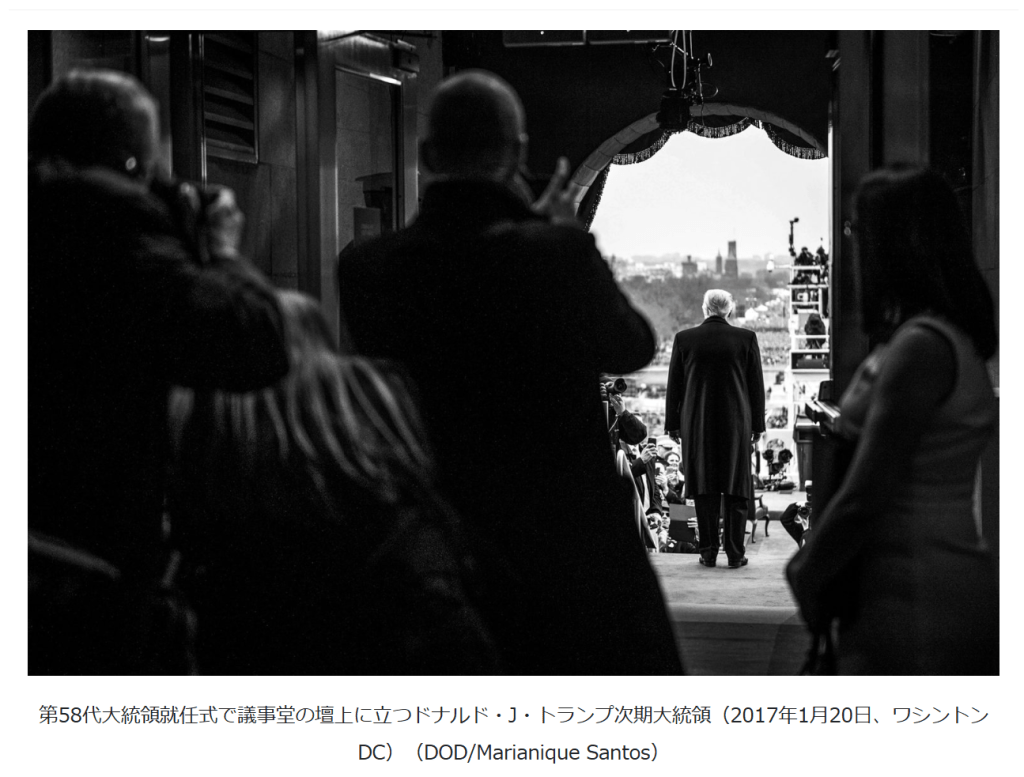
第58代大統領就任式で議事堂の壇上に立つドナルド・J・トランプ次期大統領(2017年1月20日、ワシントンDC)(DOD/Marianique Santos)
プーチンは、ロシアの影響圏(zones of influence)内における自由民主主義のさらなる侵攻に対抗するために、連携する行為主体の支持を維持しなければならない。
バルカン半島と中央アジアにおける米国の活動に関する継続的な報道は、米国が世界の覇権を維持するためにロシアを包囲しているという国内の聴衆のバイアスを強める。
クレムリンは、米国とロシアの国防費に年間5000億ドル近い開きがあることを指摘し、米国がロシアを封じ込める決意をしているとの考えを強めている[35]。
さらに、ソ連崩壊後、北大西洋条約機構(NATO)がロシアの弱みにつけ込んだことを思い起こさせ、強い否定的感情を刺激し、ロシア社会の権威主義と自由民主主義の間の矛盾した認知に影響を及ぼしている。
最後に、ウクライナ戦争において、ロシアは最終的に米国が支援する西側の代理人と闘っているというプーチンの絶え間ない主張(nonstop assertions)は、クレムリンが現在、連携する行為主体を維持するためにプロパガンダを使用していることを示している。
ロシアは、欧米とのバランスをとるために対抗するため、主権的な民主主義体制を目指す中立の行為主体の動きを積極的に進めている。
クレムリンは独立国家共同体の汎スラブ的なアイデンティティーを利用し、近隣諸国をロシアと緊密に結びつけている。
クレムリンが資金提供する言語、青少年教育、ロシア正教会のプログラムは、ユーラシア大陸に広がる「垂直統合されたプロパガンダ・ネットワーク」を作り出している[36]。
セルビア、リビア、シリア、アフガニスタンに対する西側の侵略を常に描写することは、非西側諸国を不安定にする自由民主主義の陰謀という知覚(perceptions)を煽り、米国に対抗するには復活したロシアが必要だという確証バイアスを育ててきたのである。
ロシアのグレー・プロパガンダ(gray propaganda)は、プーチンの外交政策アジェンダに反論する西側の集団的能力を弱体化させる取組みに対して、対立する行為主体の両価性(ambivalence)を育んでいる。
クレムリンは2015年から2016年にかけての難民危機を見事に利用し、欧州共同体全体の恐怖を膨れ上がらせた[37]。
加盟国に開かれた国境を維持するようにという欧州連合の主張は、各国の指導者たちの連帯の危機を引き起こした。
この危機は、北大西洋条約機構(NATO)加盟国のポーランド、チェコ共和国、ハンガリー、トルコでポピュリスト政権の台頭に拍車をかけた。
ヴィクトル・オルバン首相が「ハンガリーが従うべき新しい統治モデル」として主権民主主義を提唱したことは、ロシアのグレー・プロパガンダ(gray propaganda)が強い否定的感情を醸成し、自由主義政府が安全を提供できるかどうかを社会が疑問視するようになったことを示している[38]。
米国はロシアの工作と無縁ではない。
リベラルとポピュリストのアジェンダの間の矛盾した認識を有権者に矮小化させることを意図した影響キャンペーンで、2016年の米国国政選挙中にクレムリンのグレー・プロパガンダ(gray propaganda)の雪崩が発生した。
2017年のインテリジェンス・コミュニティの評価では、プーチンが個人的にドナルド・トランプの選挙を優遇する情報キャンペーン(information campaign)を開始したことが判明している[39]。
ロシア国営放送のロシア・トゥデイ(RT)は、約8500万人の米国の聴衆に向けて、数百の親トランプのニュースを放送した。
ロシア・トゥデイ(RT)が制作した親トランプのYouTube動画は、親ヒラリー・クリントンの広告よりも1日あたり100万回近く多く再生された。
さらに、この評価では、ロシアのトロールがFacebookで5万以上、Twitterで40万以上のアカウントを作成し、毎日トランプ支持の投稿が数百万回共有されていると結論付けている[40]。
なぜプーチンが彼を大統領執務室に好むのかと問われ、トランプは「私が偉大な男だからだ」[41]と答えた。
それとも、プーチンは単に北大西洋条約機構(NATO)は時代遅れだと主張する候補者を、米国大統領に当選させるために援助したのだろうか?
2020年の調査では、ほとんどの人がトランプよりもプーチンの方が信頼できると考えていることがわかり、米国は認知の闘い(cognitive fight)に敗れつつあるが、以下の提言では、この戦いに勝つための方法について述べている[42]。
NATOの演習「Strong Cohesion 2022」で戦術について話し合う米軍兵士とスロバキア兵(2022年9月22日、スロバキア)(写真:NATO)
提言と結論:Recommendations and Conclusions
情報の専門家は、非対称なナラティブ(narratives)から米国を守る方法として、知的財産保護の強化、選挙のハード化、「フェイク・ニュース(fake news)」を見分けるための市民教育などを日常的に提唱している[43]。
これらの提案には、知覚的操作(perceptual manipulation)から国家を守るために軍事的能力を活用しない立法措置が必要である。
また、政治家は、米国防総省(DOD)がグレー・プロパガンダ(gray propaganda)に対抗するための世界的なキャンペーン計画(global campaign plans)を策定する際に、この記事を通して議論した心理社会的手法を取り入れることができるような法律を制定しなければならない。
米軍は、認知的用兵ドメイン(cognitive warfighting domain)を成文化すべきである。
現在の統合ドクトリンは、関連する行為主体や軍事作戦への影響を判断するために、情報の広範性を理解することを重視している[44]。
しかし、統合出版物(JP)3-13「情報作戦(information operations)」は、望ましい戦略的効果のためにターゲットとする聴衆の知覚(perceptions)を形成する方法について論じていない。
したがって、統合幕僚監部は、認知的戦場で勝利するための方法と手段を軍事企業に提供するた めに、認知的戦いの領域を正式化する必要がある。
この勧告は、別の戦闘司令部の創設を提唱していないが、統合参謀本部が米国サイバーコマンドの再旗揚げと、サイバー戦(cyber warfare)、電子戦(electronic warfare)、軍事情報支援作戦(military information support operations)、民事(civil affairs)、および他のすべての統合情報機能を米国認知支配コマンド(U.S. Cognitive Dominance Command)の下に統合することを検討するよう奨励することを意図している[45]。
さらに、この勧告は、サイバー作戦を情報作戦(information operations)に置き換えることを意図していない。
むしろ、高度に競合する戦略的認知地形(strategic cognitive terrain)をめぐる競争において、情報スペクトラム全体(information spectrum)を統合用兵インテグレータ(joint warfighting integrator)として位置づけることを意図しているのである。
米軍は、ウェブやソーシャル・メディア(social media)のプラットフォームでグレー・プロパガンダ(gray propaganda)を探し出す訓練を受けた職業的専門家も導入すべきである。この「サイバー斥候(Cyber Scouts)」は、トロールが潜むグレー・ゾーン(gray zone)の社会空間を監視することになる。彼らの偵察目標は、即時の反論を必要とする非対称的なナラティブ(narratives)を特定することであろう。
人工知能(AI)アルゴリズムを搭載したサイバー斥候(Cyber Scouts)は、仮想戦場(virtual battlefield)で活動する外国人エージェントと連携することができる。
人工知能(AI)データは、トロール工場(troll farms)、「ソック・パペット(sock puppet)(※6)」、その他の悪用する者(exploiters)の摘発や廃止、グレー・プロパガンダ(gray propaganda)を伝播するネットワーク解体の一環として、統合ターゲッティング作戦に提供することができる。
(※6)【訳者註】ソック・パペットとは多重アカウント,複数のアカウントを用いて投稿などをする時の,2つ目以降のアカウントのこと(引用:https://kotobank.jp/ejword/sock%20puppet)
マーフィー(Murphy)とクール(Kuehl)の「3C」情報力モデル(接続性(connectivity)、コンテンツ(content)、認知(cognition))に「競争する(compete)」と「理解する(comprehend)」を加えることで、軍事計画担当者が対プロパガンダ計画(counterpropaganda plans)を作戦化する際の助けとなる[46]。競争は、正しいことよりも正しいことをすることを優先させる。
2008年のロシア・グルジア戦争からの教訓は、24時間365日のニュース・サイクルの中で、メッセージを細かく管理するよりも、明確さと一貫性が重要であることを発見した[47]。
「対立の原理(contrast principle)」は、開始メッセージは応答メッセージよりも説得力(persuasive)がある、というものである[48]。
したがって、統合コマンドはこの原則を守り、即座にナラティブ(narratives)を統制するようなメッセージを放送する必要がある。
2014年にウクライナ東部で起きたマレーシア航空MH17便の撃墜事件は、「対立の原理(contrast principle)」の重要性を浮き彫りにした。
クレムリンは反撃を予期して、直ちにウクライナがMH17便を撃墜したと批難した。
ロシアが提供した地対空ミサイルが旅客機を撃墜したと捜査当局が証明した時には、ニュース・サイクルはすでに他の見出しに移っていた。
したがって、認知的地形(cognitive terrain)のために闘う参謀は、誤った情報(misinformation)や偽情報(disinformation)にいちいち対応して時間を浪費するべきではない。
その代わり、敵対者の信頼性を損なうような一瞬の機会があれば、即座に指揮官に明確な声明を出さなければならない。
各統合コマンドは、対象となる人々の文化的フレームワークに精通した専門家を取り入れるべきである。
言語学、人類学、その他の文化的専門家は、何が特定の住民の共感を得られるかを判断する計画策定参謀の能力を高めてくれるだろう。
参謀は、儀式、象徴、伝説からなる文化的フレームワークを利用して、社会の「集合的無意識のプロフィール(collective unconscious profile)」を作成することができる。
「屈辱の世紀(Century of Humiliation)」を中国の集合的無意識(collective unconscious)に関連づけ、それが太平洋における米国の覇権に取って代わろうとする中国の熱情にどのような影響を与えるかを考察する。
集合的無意識のプロフィール(collective unconscious profile)は、計画担当者がターゲットとする聴衆のためのナラティブ(narratives)の可能性を収穫するのに役立つだろう。
各統合コマンドは、心理学者や社会学者を組み込んで、集合的無意識のプロフィール(collective unconscious profile)を説得力のあるコンテンツに変える必要がある。
また、計画担当者は、グラフィック・アーティストや広告の専門家を活用して、メッセージを影響力のあるミームやビデオに変換し、受信者の注意をすぐに引き、理解しやすく、共鳴させることができる。
軍事計画担当者は、提案されたテーマとメッセージを戦略的行為主体国の米大使館広報部と共有し、統一メッセージのアプローチについて合意を得る必要がある。
このステップを踏むことで、適切なメッセージを適切な聴衆に適切なタイミングで届けることができるようになる。
統合コマンドは、ターゲットとなる聴衆に到達するために、主要なコミュニケーション手段との接続性を高める必要がある。
既存のパートナーとの協力は、能力を高めるための安価な方法であろう。
たとえば、欧州戦闘軍(European Combatant Command)の計画担当者は、北大西洋条約機構(NATO)戦略的コミュニケーション・センター・オブ・エクセレンス(Strategic Communication Center of Excellence)と協力し、人気のあるソーシャル・メディア(social media)プラットフォームを活用することができる。
また、計画担当者は、特殊作戦コマンドのWebOpsの専門家を活用して、グレー・プロパガンダ(gray propaganda)に反論するための影響力のあるミーム(※7)やビデオを開発することも可能である。
(※7)【訳者註】ミームとは、模倣によって人から人へと伝達し、増殖していく文化情報。文化の遺伝子。(引用:https://kotobank.jp/word/ミーム)
認知とは、人間の心が情報を理解することである。
情報作戦(information operations)を成功させるには、意図した知覚的目標(perceptual objectives)に向かって人間の感情を刺激しなければならない。
心理学者は、文化的なフレームワークを持つメッセージに含まれる不協和音の低減アプローチを提供し、望ましい知覚効果(perceptual effects)を生み出すことができる。
計画担当者はコネクティビティ機能を利用して、リツイート、シェア、「いいね!」の数を収集し、メッセージの拡散、持続性、戦略的行為主体の反応を測定することができる。
最も重要な指標は、戦略的認知地形(strategic cognitive terrain)における悪意ある行為主体の存在感の縮小である。
最先端のコミュニケーションと心理社会科学を組み合わせて、心理的屈服戦略(psychological capitulation strategies)を採用することは、現代の戦争の性格を変えてしまった。
敵対者は半信半疑の事実(half-truths)を心理力学的な行動構成(behavioral constructs)と組み合わせて、戦略的認知地形(strategic cognitive terrain)を争うのである。
米軍は現在、グレー・プロパガンダ(gray propaganda)から社会を守るために必要な権限と能力を欠いている。
ピーター・シンガー(Peter Singer)とエマーソン・ブルッキング(Emerson Brooking)は、ある米陸軍将校の言葉を引用して、「今日、我々はナラティブの戦い(battle of the narrative)に負けることを前提に行動している」と述べている[49]。
米国はもはや情報の闘い(information fight)での敗北を認めることはできない。
デニス・マーフィー(Dennis Murphy)とジェームズ・ホワイト(James White)が警告したように、「プロパガンダに反応しないことは、国際的な情報環境を敵に譲ることになる」[50]し、敵対者が認知的戦場(cognitive battlefield)においてわれわれを絶えず出し抜くことを可能にするのである。
ノート
[1] Valery Gerasimov, “The Value of Science Is in the Foresight: New Challenges Require Rethinking the Forms and Methods of Carrying Out Combat Operations,” trans. Robert Coalson, Military Review, January–February 2016 (originally published in Military-Industrial Kurier), February 27, 2013, available at https://www.armyupress.army.mil/Portals/7/military-review/Archives/English/MilitaryReview_20160228_art008.pdf.
[2] Hannes Heine, “Fighting ‘Fake News’ Online: How Soldiers in Latvia Got Fooled by Bots,” Der Tagesspiegel, October 2, 2019, available at https://www.euractiv.com/section/eastern-europe/news/fighting-fake-news-online-how-soldiers-in-latvia-got-fooled-by-bots/.
[3] Dmitry Adamsky, “From Moscow with Coercion: Russian Deterrence Theory and Strategic Culture,” Journal of Strategic Studies 41, no. 1–2 (2018), 45.
[4] Carl von Clausewitz, On War, ed. and trans. by Michael Howard and Peter Paret (New York: Everyman’s Library, 1993), 91.
[5] Dennis Murphy and Daniel Kuehl, “The Case for a National Information Strategy,” Military Review, September–October 2015, available at https://www.armyupress.army.mil/Portals/7/military-review/Archives/English/MilitaryReview_20151031_art013.pdf; Donald Bishop, “Elements of U.S. Informational Power,” lecture to Joint Advanced Warfighting class, Joint Forces Staff College, Norfolk, Virginia, October 11, 2019.
[6] Joseph S. Nye, Jr., “What China and Russia Don’t Get About Soft Power,” Foreign Policy, April 29, 2013, available at http://foreignpolicy.com/2013/04/29/what-china-and-russia-dont-get-about-soft-power/.
[7] Dennis M. Murphy and James F. White, “Propaganda: Can a Word Decide a War?” Parameters 37, no. 3 (Autumn 2007), 15, available at https://press.armywarcollege.edu/parameters/vol37/iss3/23/.
[8] Bishop, “Elements of U.S. Informational Power.”
[9] Truda Gray and Brian Martin, “Backfires: White, Black, and Grey,” Journal of Information Warfare 6, no. 1 (2007), 7–16, available at https://www.bmartin.cc/pubs/07jiw.html.
[10] Bishop, “Elements of U.S. Informational Power.”
[11] Robert Cialdini, Influence: The Psychology of Persuasion (New York: Harper Business, 2007), 11.
[12] Adamsky, “From Moscow with Coercion”; Bishop, “Elements of U.S. Informational Power”; Murphy and Kuehl, “The Case for a National Information Strategy”; Christopher Paul and Miriam Matthews, The Russian “Firehose of Falsehood” Propaganda Model: Why It Might Work and Options to Counter It (Santa Monica, CA: RAND, 2016), available at https://www.rand.org/pubs/perspectives/PE198.html; Peter Singer and Emerson Brooking, LikeWar: The Weaponization of Social Media (New York: Houghton Mifflin Harcourt, 2018).
[13] Murphy and Kuehl, “The Case for a National Information Strategy,” 73.
[14] Jess Block Nerren, “Civic Engagement, Fake News and the Path Forward,” Journalism and Mass Communication 8, no. 2 (February 2018), 51, available at https://www.researchgate.net/publication/327793603_Civic_Engagement_Fake_News_and_the_Path_Forward_Peer_Reviewed_Journal_Article_in_Journalism_and_Mass_Communication/link/5efe737ca6fdcc4ca4474d67/download.
[15] Leon Festinger, A Theory of Cognitive Dissonance (Stanford, CA: Stanford University Press, 1957), 9.
[16] Ibid., 17.
[17] Nicholas Levy, Cindy Harmon-Jones, and Eddie Harmon-Jones, “Dissonance and Discomfort: Does a Simple Cognitive Inconsistency Evoke a Negative Affective State?” Motivation Science 4, no. 2 (September 2017), 95–108.
[18] Festinger, A Theory of Cognitive Dissonance, 18.
[19] Sebastian Cancino-Montecinos, Fredrik Björklund, and Torun Lindholm, “Dissonance and Abstraction: Cognitive Conflict Leads to Higher Level of Construal,” European Journal of Social Psychology 48, no. 1 (May 2017), 100–107.
[20] Sebastian Cancino-Montecinos, Fredrik Björklundt, and Torun Lindholm, “Dissonance Reduction as Emotion Regulation: Attitude Change Is Related to Positive Emotions in the Induced Compliance Paradigm,” PLoS One 13, no. 12 (December 2018), 3, available at https://www.ncbi.nlm.nih.gov/pmc/articles/PMC6296533/.
[21] Jonah Berger and Katherine L. Milkman, “What Makes Online Content Viral?” Journal of Marketing Research 49, no. 2 (April 2012), 199, available at https://jonahberger.com/wp-content/uploads/2013/02/ViralityB.pdf.
[22] Jason Stephens, “How to Cheat and Not Feel Guilty: Cognitive Dissonance and Its Amelioration in the Domain of Academic Dishonesty,” Theory Into Practice 56, no. 11 (March 2017), 1–10. Locus of control is the degree to which people believe that external forces have control over event outcomes. Attributions are assigned causes for behaviors.
[23] Nye, “What China and Russia Don’t Get About Soft Power.”
[24] Cialdini, Influence.
[25] Singer and Brooking, LikeWar, 159–160.
[26] Jahara W. Matisek, “Shades of Gray Deterrence: Issues of Fighting in the Gray Zone,” Journal of Strategic Security 10, no. 3 (2017), 13, available at https://digitalcommons.usf.edu/cgi/viewcontent.cgi?article=1589&context=jss.
[27] Clausewitz, On War, 91. Insights into how people’s passion makes societies susceptible to dissonance reduction manipulation were developed with public affairs expert Colonel Elizabeth Mathias, Ph.D., USAF.
[28] Andrew Chisholm, “Disrupt, Coerce, Legitimize, Attract: The Four Dimensions of Russian Smart Power” (thesis, Joint Advanced Warfighting School, June 27, 2018), 5.
[29] Gerasimov, “The Value of Science Is in the Foresight,” 24.
[30] Norbert Eitelhuber, “The Russian Bear: Russian Strategic Culture and What It Implies for the West,” Connections 9, no. 1 (Winter 2009), 5.
[31] Ibid., 11.
[32] Ibid., 13.
[33] Gerasimov, “The Value of Science Is in the Foresight,” 27.
[34] Mark Galeotti, “I’m Sorry for Creating the ‘Gerasimov Doctrine,’” Foreign Policy, March 5, 2018, available at https://foreignpolicy.com/2018/03/05/im-sorry-for-creating-the-gerasimov-doctrine.
[35] Ray Finch, “How the Russian Media Portrays the U.S. Military,” Military Review 99, no. 4 (July–August 2019), 92, available at https://www.armyupress.army.mil/Journals/Military-Review/English-Edition-Archives/July-August-2019/Finch-Russian-media/.
[36] Antoaneta Dimitrova et al., The Elements of Russia’s Soft Power: Channels, Tools, and Actors Promoting Russian Influence in the Eastern Partnership Countries, Working Paper Series No. 4 (Berlin: EU-STRAT, August 2017), 17, available at https://ec.europa.eu/research/participants/documents/downloadPublic?documentIds=080166e5b53ce9da&appId=PPGMS.
[37] Singer and Brooking, LikeWar, 207.
[38] Dimitrova et al., The Elements of Russia’s Soft Power, 15.
[39] Assessing Russian Activities and Intentions in Recent U.S. Elections (Washington, DC: Office of the Director of National Intelligence, January 6, 2017), 1, available at https://assets.documentcloud.org/documents/3719492/Read-the-declassified-report-on-Russian.pdf.
[40] Singer and Brooking, LikeWar, 112–113.
[41] Amy Cheng and Humza Jilani, “Trump on Putin: The U.S. President’s Views, In His Own Words,” Foreign Policy, July 18, 2018, available at https://foreignpolicy.com/2018/07/18/trump-on-putin-the-u-s-president-in-his-own-words/.
[42] Dante Chinni, “Foreign Leaders Top Trump on Trust, New Survey Finds,” NBC News, January 12, 2020, available at https://www.nbcnews.com/politics/meet-the-press/putin-trudeau-merkel-top-trump-trust-internationally-new-survey-finds-n1114151.
[43] Todd Schmidt, “The Missing Domain of War: Achieving Cognitive Overmatch on Tomorrow’s Battlefield,” Modern War Institute, April 7, 2020, available at https://mwi.usma.edu/missing-domain-war-achieving-cognitive-overmatch-tomorrows-battlefield/2020; Nye, “What China and Russia Don’t Get About Soft Power”; Bishop, “Elements of U.S. Informational Power”; Singer and Brooking, LikeWar; Matisek, “Shades of Gray Deterrence”; Paul and Matthews, The Russian “Firehose of Falsehood” Propaganda Model.
[44] Joint Publication 1, Doctrine for the Armed Forces of the United States (Washington, DC: The Joint Staff, March 25, 2013, Incorporating Change 1, July 12, 2017), I-19, available at https://irp.fas.org/doddir/dod/jp1.pdf.
[45] Schmidt, “The Missing Domain of War.”
[46] Murphy and Kuehl, “The Case for a National Information Strategy,” 72.
[47] Svante E. Cornell and S. Frederick Starr, The Guns of August 2008: Russia’s War in Georgia (Oxford: Routledge, 2009), 195.
[48] Cialdini, Influence, 12.
[49] Singer and Brooking, LikeWar.
[50] Murphy and White, “Propaganda,” 24.
カテゴリー
米統合軍動向、認知戦(cognitive warfare)』