参考:United States-Japan Joint Leaders’ Statement 参考:Drone sales, missile collaboration and new C2: Japan, US tighten defense ties 共通ジェット練習機など最先端技術の共同開発・共同生産を模索するため作業部会の設置を約束
The world needs the United States to continue playing this pivotal role in the affairs of nations. And yet, as we meet here today, I detect an undercurrent of self-doubt among some Americans about what your role in the world should be.
Turning to Japan’s own neighborhood, China’s current external stance and military actions present an unprecedented and the greatest strategic challenge, not only to the peace and security of Japan but to the peace and stability of the international community at large.
I am not saying this out of my strong attachment to America. I am an idealist but a realist, too. The defense of freedom, democracy, and the rule of law is the national interest of Japan.
On the spaceship called “Freedom and Democracy,” Japan is proud to be your shipmate. We are on deck, we are on task. And we are ready to do what is necessary.
The democratic nations of the world must have all hands on deck. I am here to say that Japan is already standing shoulder to shoulder with the United States. You are not alone. We are with you.
In 2022, we announced that we would secure a substantial increase of our defense budget by FY 2027 to 2% of GDP, possess counterstrike capabilities, and improve cybersecurity. Today, the deterrence that our Alliance provides is stronger than ever, bolstered by U.S. extended deterrence for Japan.
Japan is the number one foreign direct investor in the United States. Japanese companies have invested around 800 billion dollars, creating almost one million American jobs. These are good jobs with half a million jobs in the manufacturing sector alone.
Bonded by our beliefs, I pledge to you Japan’s firm alliance and enduring friendship. “Global Partners for the Future.” We are your global partner today, and we will be your global partner in the years ahead.
第1の転機は、 1970年のニクソン・ドクトリンを契機とし、 ⑴ 例えば、W・ファロン太平洋軍司令官も、米国は日本とFDPRIを通じた同盟の変革と再編交渉」を行っている と議会で証言している。 Statement of Admiral William J. Fallon, U.S. Navy, Commander U.S. Pacific Command before the Senate Armed Services Committee, 7 March, 2006, p.24. http://www.pacom.mil/speeches/sst2006/DAR-FY07-Fallon%2003-07-06.pdf ⑵ 坂元一哉「日米同盟における「物と人との協力」「人と人との協力」」『外交フォーラム』205号,2005.8, pp.15-21. レファレンス2006.7 143
それは、米国の力が太 平洋の勢力均衡の基礎であり、米国はアジアの of the Presidents of the United States: Richard Nixon, 1969, Washington DC, 1971,pp.278-279; “First Annual Report to the Congress on United States Foreign Policy for the 1970’s, February 18,1970″, Public Papers of the Presidents of the United States: Richard Nixon, 1970, Washington DC, 1971, pp. 116-190. (17) Ibid., p.141. (18) Henry Kissinger, White House Years, Boston: Little, Brown and Co., 1979, p.225. (19) “First Annual Report”, supra note 16, pp.119, 140. (20) 内閣府『年次経済財政報告平成17年度』2005, p.409. (21) 実際のところ1960年代でも米国は「2 %戦略」で求められるレベルの兵力構築を達成しておらず、ニクソン大 統領も、これは「ドクトリンを実際の能力に一致させる」試みであると述べている。 “First Annual Report”, supra note 16, p.177. (22) Kissinger, supra note 18, p.221. (23) Earl C. Ravenal, Large-Scale Foreign Policy Change: The Nixon Doctrine as History and Portent, Berkeley: Institute of International Studies, University of California, 1989, pp.40-43. (24) 川上高司『米軍の前方展開と日米同盟』同文舘出版,2004, pp.53-54. レファレンス2006.7 147 同盟国の主権と独立を守ること等を確認するも のであった。
当時の防衛政策策定において中心的な役割を 果たした人物の一人に、防衛庁の久保卓也防衛 (25) “Address at the University of Hawaii, December 7,1975”, Public Papers of the Presidents of the United States: Gerald R. Ford, 1975, Washington DC, 1977, pp.1950-1955. (26) 西川前掲注(15), pp.161-164. (27) “State of the Union Address, January 23,1980”, Department of State Bulletin, 2035, February 1980, p.Special-B ;西川 前掲注(15), pp.250-253. (28) 実際にレーガン大統領がソ連を「悪の帝国」と呼んだのは1983年3月の演説においてであるが、それ以前から 大統領はソ連に対する不信感を常々口にしていた。五十嵐武士編『アメリカ外交と21世紀の世界』昭和堂,2006, pp.56-59 ;西川吉光『現代国際関係史!V』晃洋書房,2004, pp.8,47. (29) 同上,pp.7-16 ;川上 前掲注(24), pp.62-68. (30) 佐道 前掲注⑩,pp.225-229 ;大嶽秀夫『日本の防衛と国内政治』三一書房,1983, pp.40-44. (31) 室山義正『日米安保体制下』有斐閣,1992, pp.307-325. (32) 「非核専守防衛国家 政府表現の食違い統一」『毎日新聞』1971.3.16I夕刊;等雄一郎「専守防衛論議の現段階 憲法第9条、日米同盟、そして国際安全保障の間に揺れる原則」『レファレンス』664号,2006.5, p.27. (33) 4次防策定過程については、佐道 前掲注(10), pp.239-252 ;大嶽 前掲注(30), pp.63-88 ;田中 前掲注⑶,pp.231-238. 148 レファレンス2006. 7 日米防衛協力における3つの転機
例えば (49) 防衛白書は、基盤的防衛力構想の前提として、米ソによる大規模戦争の回避努力、中ソ対立と米中和解の継続、 朝鮮半島の現状維持等を明記している。防衛庁『日本の防衛昭和51年版』1976, pp.42-43. (50) 渡邊昭夫「日本はルビコンを渡ったのか?樋口レポート以後の日本の防衛政策を検討する」『国際安全保障』 31巻 3 号,2003.12, p.77. (51) “Joint Statement Following Discussions with Prime Minister Sato of Japan, November 21,1969”, Public Papers of the Presidents, 1969, supra note 16, p.954. (52) 我部 前掲注(7), pp.136-138 ;シャラー 前掲注(5), pp.372-375.また、この佐藤・ニクソン会談を契機として、 朝鮮有事の際の在日米軍の行動を事前協議の対象外とする密約が破棄されたとの指摘もある。太田 前掲注⑺, pp.279-286.事実、太田のインタビューに応じた米国の政府関係者は、密約の失効を認め、1990年代の朝鮮半島 危機の際に日米は初の事前協議を行う段取りを整えていたと答えている。 (53) 中曽根防衛庁長官の日米役割分担論の主目的は、日米の防衛協力強化ではなく、対米依存の低減にあった。 1970年3月に中曽根長官は、「従来のような漠然たる対米期待や無原則な依存の形から脱却し、任務分担を明確 にし、日米が実質的にも対等の立場に立つ必要がある」と語っている。佐道 前掲注⑩,p.234. 一方、久保防衛 局長は、侵略を抑止するためには平時における日米の連携強化が必要であるが、米軍の有事支援は幕僚研究とし てはともかく「政治的問題としては実はあまり重要ではない」としている。久保卓也「日米安保条約を見直す (1972.6)J 久保 前掲注(37), p.55. (54) Glenn H. Snyder, “Alliance Theory: A Neorealist First Cut”, Journal of International Affairs, 44-1 (Spring 1990), pp.103-123; Glenn H. Snyder, “The Security Dilemma in Alliance Politics”, World Politics, 36-4 (July 1984), pp.461-495. レファレンス2006.7 151 現在の日本に当てはめた場合、集団的自衛権の 問題が、まさにこのディレンマに相当するだろ う。
日本においても、冷戦終結後の世界に対応す (92) Les Aspin, Secretary of Defense, The Bottom-Up Review: Forces for A New Era, September 1,1993. BURは、基盤戦力構想の1995年度で約162万人という目標兵力を、1999年度で約140万人に引き下げた。上野英 嗣「米クリントン政権の国防計画」『国防』42巻12号,1993.12, pp.42-59. (93) ユーゴの民族紛争やソマリア及びハイチの内戦への対応等をめぐる、クリントン政権の外交政策の混迷につい ては、次を参照。 David Halberstam, War in A Time of Peace: Bush, Clinton, and the Generals {Touch- stone 配.),New York: Simon & Schuster, 2002.(デービッド・ハルバースタム(小倉慶郎ほか訳)『静かなる 戦争』PHP研究所,2003) (94) Department of Defense, Report of the Quadrennial Defense Review, May 1997, sec.7. (95) 第1次朝鮮半島危機については、春原剛『米朝対立 核危機の十年』日本経済新聞社,2004, pp.84-213 ;ケネ ス・キノネス(伊豆見元ほか監訳)『北朝鮮米国務省担当官の交渉秘録』中央公論新社,2000 ;ドン・オーバードー ファー(菱木一美訳)『二つのコリア国際政治の中の朝鮮半島』共同通信社,1998, pp.294-430.米国が検討した 軍事オプションについては、春原『米朝対立』pp.130-131, 153-155. (96) 台湾海峡危機については、平松茂雄『台湾問題中国と米国の軍事的確執』勁草書房,2005, pp.149-204 ;船橋 洋一『同盟漂流』岩波書店,1997, pp.385-439. (97) Department of Defense, United States Security Strategy for the East Asia-Pacific Region, February 1995, pp.10,25.ナイ・レポートについては、次も参照。船橋 前掲注(96), pp.276-295. (98) United States Security Strategy for the East Asia-Pacific Region, supra note 97, p.2. 158 レファレンス2006. 7 日米防衛協力における3つの転機
しかし、彼ら の批判は、日米同盟を重視しない米国政府に危 機感を持たせ、日米同盟強化へと舵を切らせる ための方策でもあった。樋口レポートが日米同 (103)同上,pp.13-16. 噸同上,pp.16-18. 仙5)秋山昌廣『日米の戦略対話が始まった』亜紀書房,2002, pp.45-46. G06)防衛問題懇談会前掲注(99), pp.18-24. GOT)渡遷昭夫氏への筆者によるインタビュー(2006.4.14)。一方で同氏は、「冷戦が終わり、ソ連の脅威が消滅して 見ると、1970年代の日本の防衛政策当局者が考案した基盤的防衛力構想がより適合的な環境が生まれたのは、歴 史の皮肉である」とも述べている。渡邊 前掲注(50), p.77. 仙8)秋山前掲注噸,p.42. 仰9)渡邊昭夫氏への筆者によるインタビュー(2006.4.14)。 (110) Patrick M. Cronin and Michael J. Green, Redefining the U.S.-Japan Alliance: Tokyo’s National Defense Program, Washington DC: NDU Press, 1994 (McNair Paper 31), p.l〇. 160 レファレンス2006.7 日米防衛協力における3つの転機
一方、95大綱から約10年が経過し、日本も冷 戦後の防衛政策を見直す時期に差し掛かってい (125) White House, The National Security Strategy of the United States of America, September 2002, pp.15-16. (126) 米欧間の亀裂については、例えば次を参照。 Sergio Fabbrini ed., The United States Contested: American Unilateralism and European Discontent, London: Routledge, 2006; Philip H. Gordon and Jeremy Shapiro, Allies at War: America, Europe, and the Crisis over Iraq, New York: McGraw-Hill, 2004. (127) Department of Defense, Quadrennial Defense Review Report, February 6, 2006 ;福田毅「QDR2006と 2007年国防予算案「長い戦争」のための国防計画」『調査と情報-ISSUE BRIEF —』512号,2006.2, pp.3-5. (128) Daniel M. Kliman, Japans Security Strategy in the Post-9/11 World: Embracing a New Realpolitik, Westport: Praeger, 2006.クリマンは、特に自衛隊のインド洋派遣のケースでは「内面化された外圧」(inter- nalized gaiatsu)の要因が強く働き、それは自衛隊派遣理由に関する政府の若干ネガティブな論理(自衛隊派遣 が日本の国益に寄与するというものではなく、貢献しなければ国際社会から孤立するという論理)に表れていた と指摘している。Ibid., pp.75-82. 164 レファレンス2006.7 日米防衛協力における3つの転機
防衛庁内の大綱見直し作業である「防衛力の在り方検討会議」は、既に2001(平成13)年9月に立ち上げら れていた。しかし、アフガニスタン・イラク情勢への対応や、武力攻撃事態関連法の整備といった優先課題が山 積していたため、内部検討はなかなか進拶しなかったと思われる。 (136) 具体的には、04大綱では、95大綱と比べ戦車及び火砲(主要特科装備)がそれぞれ900両/門から600両/門に、 護衛艦が50隻から47隻に、海自航空機(哨戒機等)が170機から150機に、空自航空機が400機から350機に削減さ れる一方で、テロや平和支援活動に即応可能な中央即応集団の新設、空中給油機能やミサイル防衛システムの整 備等が盛り込まれた。 (137) このレポートを作成した超党派の研究グループには、G.W・ブッシュ政権で政府入りすることになるR・アーミ テージ、P・ウォルフォウィッツ、M・グリーンや、クリントン政権で対日政策を担当したJ.ナイやK•キャンベル 等が参加した。 (138) Richard L. Armitage et. al., The United States and Japan: Advancing Toward a Mature Partnership (INSS Special Report), Washington DC: NDU Press, October 11,2000, pp.2-4. 166 レファレンス2006. 7 日米防衛協力における3つの転機
在日米軍再編の主 側)アーミテージ・レポートの共同執筆者である「プリスタップ国家戦略研究所(INSS)研究員も、「より対等な 同盟相手となるため過去4年間に日本がとったステップは……日米の絆を強めるのに貢献した」と評価している。 James J. Przystup, U.S. Japan Relations: Progress Toward a Mature Partnership, Washington DC: NDU Press, June 2005 (INSS Occasional Paper, 2005/2), p.5. (140) “Joint Statement: U.S.-Japan Security Consultative Committee”, December 16, 2002. http://www.state.gOv/r/pa/prs/ps/2002/16007.htm (2000年以降の SCC 関連文書の邦訳は、外務省ホーム ペーシ http://www.mofa.go.jp/mofaj/area/usa/hosho/index.html に掲戦されている) ¢41) “Joint Statement of the U.S.-Japan Security Consultative Committee”, February 19, 2005.
(142) Security Consultative Committee Document, U.S.-Japan Alliance: Transformation and Realignment for the Future, October 29, 2005. http://www.state.gov/documents/organization/55886.pdf レファレンス2006.7 167 目的もまさにその点にあり、SCC文書は、日 米両国の能力(抑止力)強化、司令部間の連携 向上、インターオペラビリティの向上等を再編 の指針とすることを明記した。
日米同盟の強化が中国の脅威に対抗する性格を顕在化させつつあるという認識はその後 も強まっているが、オバマ政権の「アジア回帰」の一環として進行しつつある日米同盟再 編の新展開に対する中国の認識を踏まえた、その検討は稿をあらためて行うこととしたい。 ー 注 ー 1 Banning Garrett and Bonnie Glaser, “Chinese Apprehensions About Revitalization of the U.S.-Japan Alliance,Survey, Vol.XXXVII, No.4 (April1997), pp.385-386. 2 米中接近以降の中米ソ関係を「大三角」とする冷戦期の戦略論が下敷きになっている。 3 Wu Xinbo, “The End of the Silver Lining: A Chinese View of the U.S.-Japanese Alliance,The Wasington Quarterly, 29:1(Winter 2005-06), pp. 119-130. _ 90 — 』
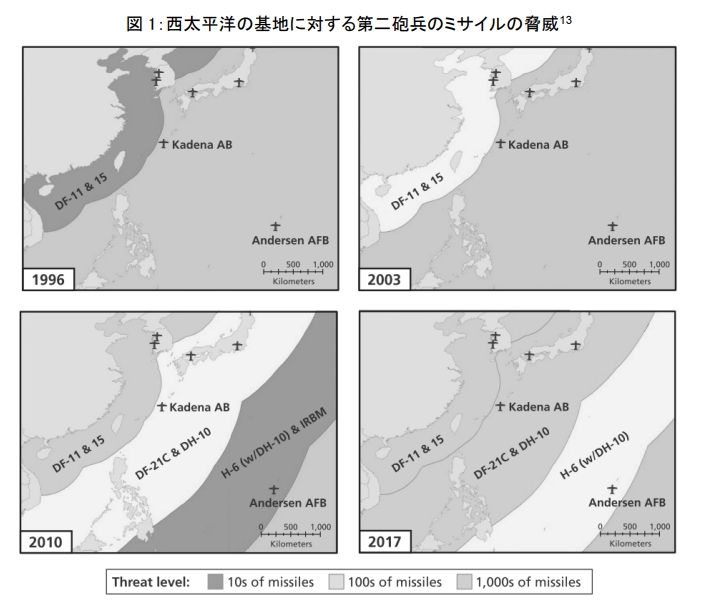
2020年1月19日に開かれた日米安全保障条約60周年記念レセプションで、安倍首相 は、日米同盟を「アジアと、インド•太平洋、世界の平和を守り、繁栄を保証する不動の 柱」であると述べた33。だが現在、この「柱」が決して「不動」ではなく、米国側の政策変 -35- 第2章日米同盟のこれから 更により揺らぐ可能性があることが明るみに出てきている。今後日本には、この「柱」を 守りつつ、同時に安全保障面での日本の対米依存度を引き下げることが求められる。 これら二つの要請に同時に応えるのは決して容易なことではない。だが、本稿で検討し た対米依存度の低減に資すると考えられる方策がいずれも日米同盟の強化にもつながるも のであることは、それが不可能ではないことを示していると言えよう。 ー注ー 1「日本国とアメリカ合衆国との間の相互協力及び安全保障条約(日米安全保障条約)の署名60周年 に際する共同発表(仮訳)」(2020年1月17日) [https://www.mofa.go.jp/mofaj/press/release/press4_008253.html](2020 年1月 20 日アクセス)。 2 David M. Herszenhorn and Lili Bayer, “Trump’s whiplash NATO summit: President says US can go it alone if allies don’t meet spending target.,” Politico, updated July 13, 2018 [https://www.politico.eu/article/trump- threatens-to-pull-out-of-nato/] (2020 年 2 月1日アクセス)。 3 Eileen Sullivan, “Trump Questions the Core of NATO: Mutual Defense, Including Montenegro,” The New York Times. July 18, 2018 [https://www.nytimes.com/2018/07/18/world/europe/trump-nato-self-defense- montenegro.html](2019 年12 月15 日アクセス)。 4 たとえば、2018年6月12日のシンガポールでの初の米朝首脳会談後のトランプ大統領の記者会見の 速記録を参照。https://www.vox.com/world/2018/6/12/17452624/trump-kim-summit-transcript-press- conference-full-text (2020 年1月 6 日アクセス)。 5 同レターは、https://www.nytimes.com/2018/12/20/us/politics/letter-jim-mattis-trump.html(2020 年 2 月 20 日アクセス)などで読める。 6 “The future of the EU – Emmanuel Macron warns Europe: NATO is becoming brain-dead – America is turning its back on the European project. Time to wake up, the French president tells The Economist,” The Economist. November 7, 2019 [https://www.economist.com/europe/2019/ll/07/emmanuel-macron-warns-europe-nato-is- becoming-brain-dead]; “Transcript Emmanuel Macron in his own words (English) – The French president’s interview with The Economist,” The Economist, [https://www.economist.com/europe/2019/ll/07/emmanuel- macron-in-his-own-words-english](ともに 2020 年 2 月1日アクセス)。 7 uAngela Merkel condemns Macron*s ‘drastic words’ on NATO,” DW. November 7, 2019 [https://www.dw.com/en/angela-merkel-condemns-macrons-drastic-words-on-nato/a-51154583] (2020 年 2 月 !日アクセス)。 8 “March/April 2020 Issue: Come Home, America?” Foreign Affairs [https://www.foreignaffairs.com/articles/come-home-america] (2020 年 2 月 29 日アクセス)。 9高坂正堯「第四章 アメリカの変化の意味——普遍主義と国益中心主義」『地球的視野で生きる«日 本浮上論»』(実業之日本社、1975年)168-169 M〇 10同上175頁。 11 Daniel W. Drezner, “This Time Is Different: Why U.S. Foreign Policy Will Never Recover,” Foreign Affairs. May/June 2019 [https://www.foreignaffairs.com/articles/2019-04-16/time-different] (2020 年 2 月 29 日アク セス)。 12 Eliot A. Cohen, “America’s Long Goodbye: The Real Crisis of the Trump Era,” Foreign Affairs. January/February 2019 [https://www.fdreignaffairs.com/articles/united-states/long-term-disaster-trump-fbreign- policy] (2020 年2 月18 日アクセス);Gideon Rose, “What’s Inside: The United States is questioning the global role it once embraced.,” Foreign Affairs. March/April 2020 [https://www.foreignaffairs.com/articles/come-home-america] (2020 年 2 月 29 日アクセス)。 13 “Second Artillery Missile Threats to Bases in the Western Pacific, 1996-2017,” Erick Heginbotham, et al.. The U.S.-China Military Scorecard: Forces, Geography, and the Evolving Balance of Power 1996-2017 (Santa Monica: Rand Corporation, 2015), p.51.なお、第二砲兵は2015年12月31日にロケット軍に改称され た。 14ある匿名の外務省幹部の発言。 -36- 第2章日米同盟のこれから
高橋杉雄「北朝鮮核問題と拡大抑止」日本国際問題研究所編『安全保障政策のリアリティ・チェッ ク』(日本国際問題研究所、2017年3月)25-27 M〇 Richard L. Armitage and Joseph S. Nye, The U.S.-Japan Alliance: Anchoring Stability in Asia (Washington, D.C.: Center for Strategic and International Studies, August 2012, 2012), p.1. 神谷万丈「日本の安全保障政策と日米同盟——冷戦後の展開と今後の課題」公益財団法人日本国際問 題研究所監修、久保文明編『アメリカにとって同盟とはなにか』(中央公論新社、2013年)340-341 頁。 Richard L. Armitage and Joseph S. Nye, More Important Than Ever: Renewing the U.S.-Jap an Alliance for the 21st Century. (Washington, D.C.: Center fbr Strategic and International Studies, October 3, 2018), p. 7. “Military expenditure by country as percentage of gross domestic product, 1988-2018,SIPRI Military Expenditure Database [https://www.sipri.org/sites/default/files/Data%20for%20all%20countries%20from%201988%E2%80%932018 %20as%20a%20share%20of%20GDP%20%28pdf%29.pdf] (2019 年12 月15 日アクセス)。 防衛省「我が国の防衛と予算(案)——令和2年度予算の概要」6頁。 同上。 内閣サイバーセキュリティセンター「政府のサイバーセキュリティに関する予算」(令和2年度予算 概算要求)[https://www.nisc.go.jp/active/kihon/pdf/yosan2020.pdf] (2019 年12 月15 日アクセス)。 防衛省「我が国の防衛と予算(案)ーー令和2年度予算の概要」4頁。 「『航空宇宙自衛隊』に改称 政府検討 空自に新領域任務」『産経新聞』2020年1月6日;「自民部 会、『宇宙作戦隊』新設を了承 防衛省設置法改正案、今国会提出へ」『時事通信』2020年1月23 日。 ある匿名の元米国政府高官の筆者に対する発言。 Lara Seligman and Robbie Gramer, “Trump Asks Tokyo to Quadruple Payments fbr U.S. Troops in Japan,” Foreign Policy. November 15, 2019 [https://fbreignpolicy.com/2019/11/15/trump-asks-tokyo-quadruple- payments-us-troops-japan/] (2019 年12 月16 日アクセス)。 “Beyond the Spear and Shield: Next Steps for the Alliance,2020 U.S.-Japan Security Seminar, Washington, D.C., January14, 2020.日米安全保障セミナーは、日本国際問題研究所と米国の戦略国際問題研究所 (Center for Strategic and International Studies)が共催する日米同盟に関する最も権威あるとされる年 次専門家会合である。 山本吉宣「協調的安全保障の可能性ーー基礎的な考察」『国際問題』No.425 (1995年8月)6頁。よ り 詳しく は、Bjorn Moller, Common Security andNonojfensive Defense: A Neorealist Perspective (Boulder: Lynne Rienner,1992)を参照。 「第156回国会 参議院憲法調査会 第7号」(2003年5月14日)参議院憲法審査会ホームページ [https://www.kenpoushinsa.sangiin.go.jp/kenpou/keika_g/156_07g.html](2019 年12 月 29 日アクセス)。 坂本は、次のように述べて防衛的防衛を専守防衛と扁ー視した。「冷戦のさなかの一九七〇年代、八 〇年代のヨーロッパで、国家間の軍備競争を防止し、平和共存を促進するために取るべき防衛政策と して各国が防衛的防衛、ちょっと変な言い方なんですが、これはディフェンシブディフェンスと言っ ておりましたが、あるいは非挑発的防衛、ノンプロバカティブディフェンス、つまり日本語で言えば 専守防衛の政策を取るべきだという議論がなされました。」 自由民主党安全保障調査会弾道ミサイル防衛に関する検討チーム「弾道ミサイル防衛の迅速かつ抜本 的な強化に関する提言」(2017年3月29日)。 “Statement of Admiral Harry B. Harris Jr., U.S. Navy Commander, U.S. Pacific Command, before the Senate Armed Services Committee on U.S. Pacific Command Posture, 27 April, 201,”p. 7. 村野将「『INF後の世界』と日米同盟:中国抑止に向け具体的な議論を」『nippon.com』2019年11月 6 日[https://www.nippon.com/ja/in-depth/d00526/] (2020 年 2 月 28 日アクセス)。 「令和2年1月19日 日米安全保障条約60周年記念レセプション」首相官邸ホームページ [https://www.kantei.go.jp/jp/98 abe/actions/202001/19anpo.html](2020 年1月 20 日アクセス)。 -37- 』

 ジジイがあれこれ考えた