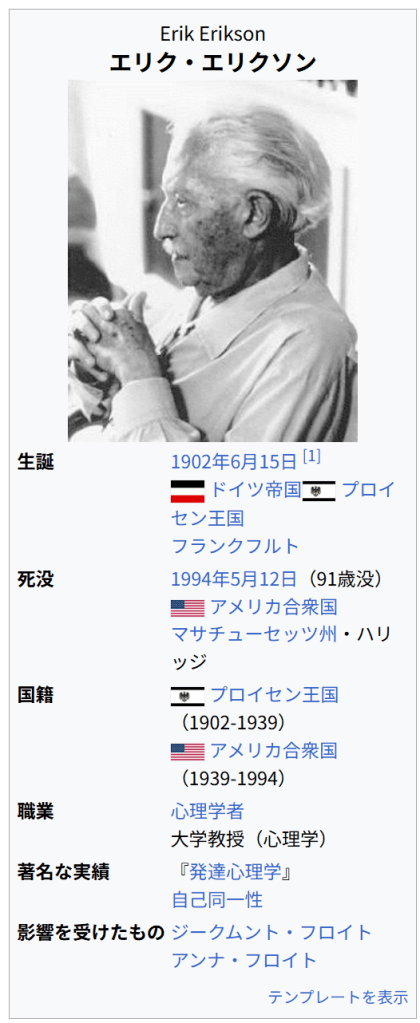
Childhood and Society, W. W. Norton, 1950. 『幼年期と社會(前篇)性と文化の錯綜』、草野榮三良譯、日本教文社、1954年 『幼年期と社會(中篇)個性の成立』、草野榮三良譯、日本教文社、1955年 『幼年期と社會(後篇)英雄と精神異常の境』、草野榮三良譯、日本教文社、1956年 『幼児期と社会』、仁科弥生訳、みすず書房、1977年-1980年 Young man Luther: a study in psychoanalysis and history, Faber & Faber Ltd, 1958. 『青年ルター――精神分析的・歴史的研究』、大沼隆訳、教文館、1974年 『青年ルター』全2巻、西平直訳、みすず書房、2002年-2003年 Identity and the life cycle, International Universities Press, 1959. 『自我同一性――アイデンティティとライフ・サイクル』、小此木啓吾訳編、誠信書房、1973年 『アイデンティティとライフサイクル』、西平直・中島由恵訳、誠信書房、2011年 Insight and responsibility, Norton, 1964. 『洞察と責任――精神分析の臨床と倫理』、鑪幹八郎訳、誠信書房、1971年、改訳版2016年 Identity: youth and crisis, Norton, 1968. 『アイデンティティ――青年と危機』、岩瀬庸理訳、北望社、1969年 『アイデンティティ――青年と危機』、中島由恵訳、新曜社、2017年 Gandhi’s truth: on the origins of militant nonviolence, Norton, 1969. 『ガンディーの真理――戦闘的非暴力の起原』全2巻、星野美賀子訳、みすず書房、1973年-1974年 全米図書賞受賞 Play and development, Norton, 1972. 『遊びと発達の心理学』、赤塚徳郎・森楙監訳、黎明書房、1983年 Dimensions of a new identity: the 1973 Jefferson lectures in the humanities, Norton, 1974. 『歴史のなかのアイデンティティ――ジェファソンと現代』、五十嵐武士訳、みすず書房、1979年 Toys and reasons: stages in the ritualization in experience, Norton, 1977. 『玩具と理性――経験の儀式化の諸段階』、近藤邦夫訳、みすず書房、1981年 The life cycle completed, Norton, 1982. 『ライフサイクル、その完結』、村瀬孝雄・近藤邦夫訳、みすず書房、1989年、増補版2001年
共著
In search of common ground ; conversations wiht Erik H. Erikson and Huey P. Newton, with Huey P. Newton, Norton, 1973. 『エリクソンVS.ニュートン―アイデンティティーと革命をめぐる討論』、ヒューイ・P・ニュートン共著、近藤邦夫訳、みすず書房、1975年 Vital involvement in old age, with Joan M. Erikson, Helen Q. Kivnick, Norton, 1986. 『老年期――生き生きしたかかわりあい』、朝長正徳・朝長梨枝子訳、みすず書房、1990年
編著
Youth: change and challenge, Basic Books, 1963. 『青年の挑戦』、栗原彬監訳、北望社、1971年 『自我の冒険――脱工業社会の青年たち』、栗原彬監訳、金沢文庫、1973年
脚注 [脚注の使い方]
^ a b c d e f g h i B.J.Kaplan; V.A.Sadock『カプラン臨床精神医学テキスト DSM-5診断基準の臨床への展開』(3版)メディカルサイエンスインターナショナル、2016年5月31日、Chapt.4。ISBN 978-4895928526。 ^ a b c Macnow, Alexander Stone, ed (2014). MCAT Behavioral Science Review. New York City: Kaplan Publishing. p. 220. ISBN 978-1-61865-485-4 ^ “Stages of Social-Emotional Development – Erik Erikson”. childdevelopmentinfo.com. Child Development Institute. 2015年5月8日閲覧。 ^ a b Allen, Eileen; Marotz, Lynn (2003). Developmental Profiles Pre-Birth Through Twelve (4th ed.). Albany, NY: Thomson Delmar Learning. ISBN 978-0-7668-3765-2 ^ Crain, William (2011), Theories of Development: Concepts and Applications (6th ed.), Upper Saddle River, NJ: Pearson Education, Inc., ISBN 978-0-205-81046-8 ^ Gross, Francis L. (1987), Introducing Erik Erikson: An Invitation to his Thinking, Lanham, MD: University Press of America, p. 47, ISBN 0-8191-5788-0 ^ Wright, Jr, J. Eugene (1982). Erikson: Identity and Religion. New York, NY: Seabury Press. p. 73. ISBN 0-8164-2362-8 ^ Stevens, Richard (1983). Erik Erikson: An Introduction. New York, NY: St. Martin’s Press. pp. 48–50. ISBN 978-0-312-25812-2 ^ 清水書院『用語集 現代社会+政治・経済’12-’13年版』6ページ
① 他者の内面を実際以上に理解していると誤解することを透明性の錯覚<透明性錯誤>という。 ② 集団の違いと行動傾向との間に、実際にはない関係があると捉えてしまうことを疑似相関という。 ③ 観察者が状況要因を十分に考慮せず、行為者の内的特性を重視する傾向を行為者 − 観察者バイアスという。 ④ 自分の成功については内的要因を、自分の失敗については外的要因を重視する傾向を確証バイアスという。 ⑤ 人物のある側面を望ましいと判断すると、他の側面も望ましいと判断する傾向を光背効果<ハロー効果>という。
① 他者の内面を実際以上に理解していると誤解することを透明性の錯覚<透明性錯誤>という。 間違いです。透明性錯誤は「自分の内面を他人に読まれている」という錯覚のことです。 ② 集団の違いと行動傾向との間に、実際にはない関係があると捉えてしまうことを疑似相関という。 間違いです。これは錯誤相関の内容です。 疑似相関は実際にはない関係があると捉えてしまうことですが、「集団の違いと行動傾向の間に」ではありません。
③ 観察者が状況要因を十分に考慮せず、行為者の内的特性を重視する傾向を行為者 − 観察者バイアスという。 間違いです。行為者-観察者バイアスは、自分が行為者であった時の成功や失敗を外的要因に、自分が観察者であった時の成功や失敗を内的要因に帰属させやすいことです。 他人が試験に落ちたのは努力が足りなかったから、自分が試験に落ちたのは周囲の環境が悪かったからというように。
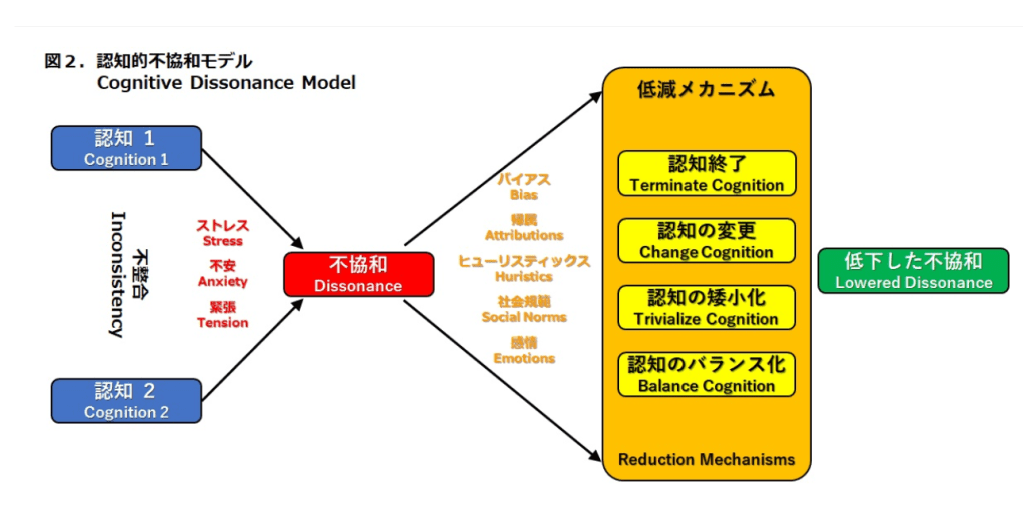
MILTERMでは認知戦(cognitive warfare)について、warontherocks.comに掲載された現役自衛官の二つの記事、「新しい技術、新しい概念:中国のAIと認知戦争についての計画 (War on the Rocks)」、「中国の「認知戦」の将来:ウクライナ戦争の教訓 (War on the Rocks)」を紹介し、更にフランスの武官の記事「戦争の前に戦争に勝つ?:認知戦に関するフランス人の視点 (War on the Rocks)」、「神経認知戦:ノン・キネティックな脅威で戦略的インパクトを与える (smallwarsjournal.com)」を紹介してきたところである。ここで紹介するのはNational Defense University Pressが季刊として発行して「Joint Force Quarterly 108」に掲載された「America Must Engage in the Fight for Strategic cognitive terrain」である。この記事は、認知的不協和理論(cognitive dissonance theory) とそれに関連する精神力動的なコンセプト(psychodynamic concepts)を紹介し、社会的知覚(societal perceptions)が比較的容易に操作されることを説明し、これらのコンセプトは、ロシアの戦略的認知地形(strategic cognitive terrain)をめぐる闘いに適用され、ライバルが国家安全保障の狙いを実現するために社会を操作する方法を示すものとしている。知覚操作(perceptual manipulation)がどのように行われるかを理解する一助になると考える。(軍治)』
『米国は戦略的認知地形をめぐる闘いで交戦しなければならない America Must Engage in the Fight for Strategic cognitive terrain
By Daniel S. Hall
JOINT FORCE QUARTERLY 108
1st Quarter, January 2023
ダニエル・S・ホール(Daniel S. Hall)大佐(米国)は、テキサス州エルパソの北方統合タスク部隊のインテリジェンス部長である。
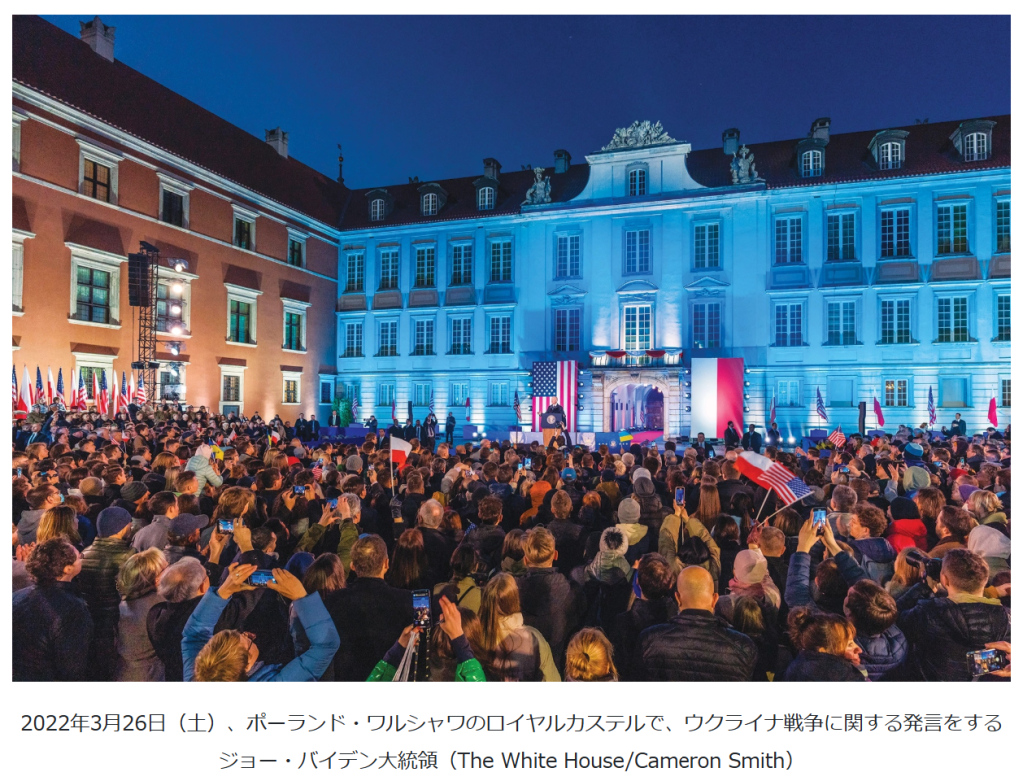
2022年3月26日(土)、ポーランド・ワルシャワのロイヤルカステルで、ウクライナ戦争に関する発言をするジョー・バイデン大統領(The White House/Cameron Smith)
撮影監督ゼップ・アルゲイヤー(Sepp Allgeier)と共に大型カメラを覗く、ドイツ人映画監督レニ・リーフェンシュタール(Leni Riefenstahl)1934年9月5日から8日までニュルンベルクでのナチ党大会で、『意志の勝利(Triumph of the Will)』の撮影中(Everett Collection)
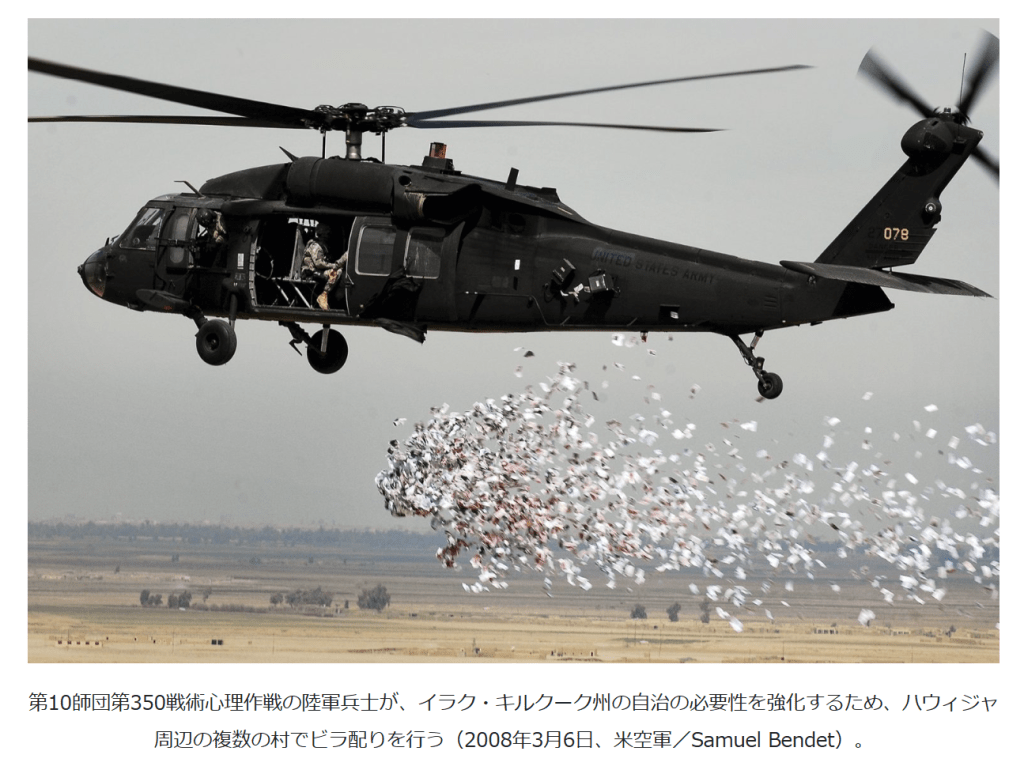
記事「プロパガンダ:言葉で戦争は決められるか?(Propaganda: Can a Word Decide a War?)」デニス・マーフィー(Dennis Murphy)とジェームズ・ホワイト(James White)は、統合参謀本部による「プロパガンダ」の定義を「直接的または間接的にスポンサーを利するために、任意のグループの意見(opinions)、感情(emotions)、態度(attitudes)、または振舞い(behavior)に影響を与えるためにデザインされた国家目標を支援するためのコミュニケーションの任意の形式」[7]と言及している。。
ロバート・チャルディーニ(Robert Cialdini)は、受け手の振舞い(behavior)を送り手の利益になるように意図的に誤解させる非対称なナラティブ(narratives)を「影響力の武器(weapons of influence)」と呼び、「影響力の武器」は説得力があり、人がその魅力的な力に抵抗することは困難であると主張している。
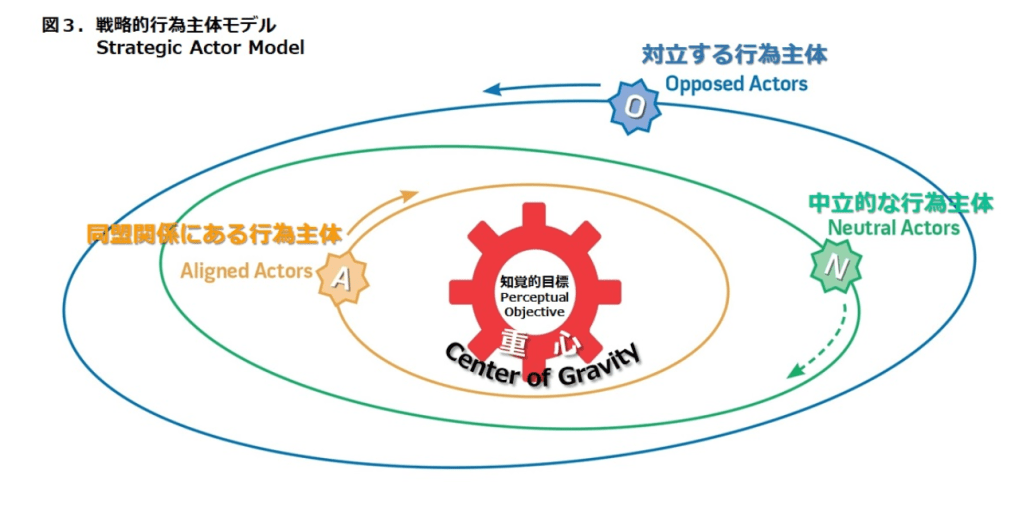
ゲラシモフの21世紀の戦争に対する考えは、ロシア参謀本部に人間の知覚(human perception)を重心(center of gravity)に置いた間接的なアプローチを発見させ、自由民主主義の規範や制度を自らに反するような社会の断層を開かせるものであった[34]。
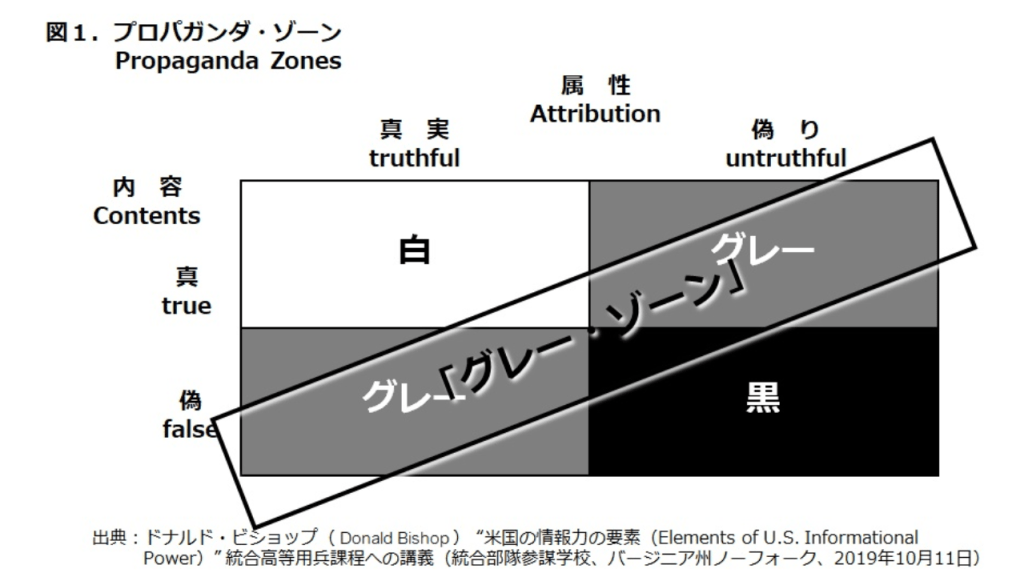
クリミア併合の条件を整えるために、ウクライナ社会の既存の亀裂を拡大させたロシアのグレー・プロパガンダ(gray propaganda)の猛攻と、2013年のキーウのユーロマイダン・デモに続いてドンバスに「リトル・グリーン・メン(little green men)」を登場させたことは、クレムリンの知覚操作(manipulating perceptions)の専門性が高まっていることを浮き彫りにしている。
この勧告は、別の戦闘司令部の創設を提唱していないが、統合参謀本部が米国サイバーコマンドの再旗揚げと、サイバー戦(cyber warfare)、電子戦(electronic warfare)、軍事情報支援作戦(military information support operations)、民事(civil affairs)、および他のすべての統合情報機能を米国認知支配コマンド(U.S. Cognitive Dominance Command)の下に統合することを検討するよう奨励することを意図している[45]。
たとえば、欧州戦闘軍(European Combatant Command)の計画担当者は、北大西洋条約機構(NATO)戦略的コミュニケーション・センター・オブ・エクセレンス(Strategic Communication Center of Excellence)と協力し、人気のあるソーシャル・メディア(social media)プラットフォームを活用することができる。
[8] Bishop, “Elements of U.S. Informational Power.”
[9] Truda Gray and Brian Martin, “Backfires: White, Black, and Grey,” Journal of Information Warfare 6, no. 1 (2007), 7–16, available at https://www.bmartin.cc/pubs/07jiw.html.
[10] Bishop, “Elements of U.S. Informational Power.”
[11] Robert Cialdini, Influence: The Psychology of Persuasion (New York: Harper Business, 2007), 11.
[12] Adamsky, “From Moscow with Coercion”; Bishop, “Elements of U.S. Informational Power”; Murphy and Kuehl, “The Case for a National Information Strategy”; Christopher Paul and Miriam Matthews, The Russian “Firehose of Falsehood” Propaganda Model: Why It Might Work and Options to Counter It (Santa Monica, CA: RAND, 2016), available at https://www.rand.org/pubs/perspectives/PE198.html; Peter Singer and Emerson Brooking, LikeWar: The Weaponization of Social Media (New York: Houghton Mifflin Harcourt, 2018).
[13] Murphy and Kuehl, “The Case for a National Information Strategy,” 73.
[15] Leon Festinger, A Theory of Cognitive Dissonance (Stanford, CA: Stanford University Press, 1957), 9.
[16] Ibid., 17.
[17] Nicholas Levy, Cindy Harmon-Jones, and Eddie Harmon-Jones, “Dissonance and Discomfort: Does a Simple Cognitive Inconsistency Evoke a Negative Affective State?” Motivation Science 4, no. 2 (September 2017), 95–108.
[18] Festinger, A Theory of Cognitive Dissonance, 18.
[19] Sebastian Cancino-Montecinos, Fredrik Björklund, and Torun Lindholm, “Dissonance and Abstraction: Cognitive Conflict Leads to Higher Level of Construal,” European Journal of Social Psychology 48, no. 1 (May 2017), 100–107.
[20] Sebastian Cancino-Montecinos, Fredrik Björklundt, and Torun Lindholm, “Dissonance Reduction as Emotion Regulation: Attitude Change Is Related to Positive Emotions in the Induced Compliance Paradigm,” PLoS One 13, no. 12 (December 2018), 3, available at https://www.ncbi.nlm.nih.gov/pmc/articles/PMC6296533/.
[22] Jason Stephens, “How to Cheat and Not Feel Guilty: Cognitive Dissonance and Its Amelioration in the Domain of Academic Dishonesty,” Theory Into Practice 56, no. 11 (March 2017), 1–10. Locus of control is the degree to which people believe that external forces have control over event outcomes. Attributions are assigned causes for behaviors.
[23] Nye, “What China and Russia Don’t Get About Soft Power.”
[27] Clausewitz, On War, 91. Insights into how people’s passion makes societies susceptible to dissonance reduction manipulation were developed with public affairs expert Colonel Elizabeth Mathias, Ph.D., USAF.
[28] Andrew Chisholm, “Disrupt, Coerce, Legitimize, Attract: The Four Dimensions of Russian Smart Power” (thesis, Joint Advanced Warfighting School, June 27, 2018), 5.
[29] Gerasimov, “The Value of Science Is in the Foresight,” 24.
[30] Norbert Eitelhuber, “The Russian Bear: Russian Strategic Culture and What It Implies for the West,” Connections 9, no. 1 (Winter 2009), 5.
[31] Ibid., 11.
[32] Ibid., 13.
[33] Gerasimov, “The Value of Science Is in the Foresight,” 27.
[43] Todd Schmidt, “The Missing Domain of War: Achieving Cognitive Overmatch on Tomorrow’s Battlefield,” Modern War Institute, April 7, 2020, available at https://mwi.usma.edu/missing-domain-war-achieving-cognitive-overmatch-tomorrows-battlefield/2020; Nye, “What China and Russia Don’t Get About Soft Power”; Bishop, “Elements of U.S. Informational Power”; Singer and Brooking, LikeWar; Matisek, “Shades of Gray Deterrence”; Paul and Matthews, The Russian “Firehose of Falsehood” Propaganda Model.
[44] Joint Publication 1, Doctrine for the Armed Forces of the United States (Washington, DC: The Joint Staff, March 25, 2013, Incorporating Change 1, July 12, 2017), I-19, available at https://irp.fas.org/doddir/dod/jp1.pdf.
[45] Schmidt, “The Missing Domain of War.”
[46] Murphy and Kuehl, “The Case for a National Information Strategy,” 72.
[47] Svante E. Cornell and S. Frederick Starr, The Guns of August 2008: Russia’s War in Georgia (Oxford: Routledge, 2009), 195.