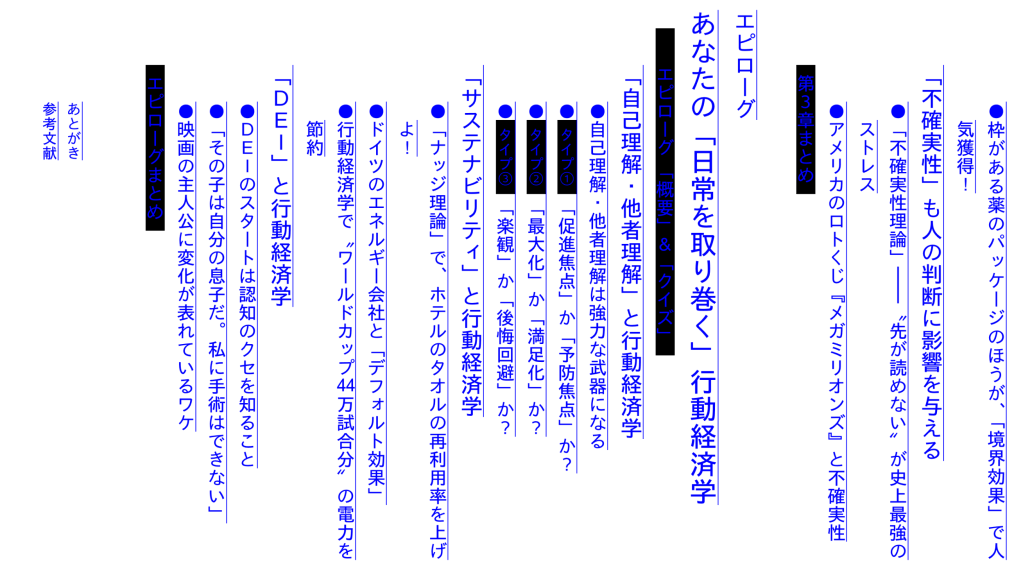
① 他者の内面を実際以上に理解していると誤解することを透明性の錯覚<透明性錯誤>という。 ② 集団の違いと行動傾向との間に、実際にはない関係があると捉えてしまうことを疑似相関という。 ③ 観察者が状況要因を十分に考慮せず、行為者の内的特性を重視する傾向を行為者 − 観察者バイアスという。 ④ 自分の成功については内的要因を、自分の失敗については外的要因を重視する傾向を確証バイアスという。 ⑤ 人物のある側面を望ましいと判断すると、他の側面も望ましいと判断する傾向を光背効果<ハロー効果>という。
① 他者の内面を実際以上に理解していると誤解することを透明性の錯覚<透明性錯誤>という。 間違いです。透明性錯誤は「自分の内面を他人に読まれている」という錯覚のことです。 ② 集団の違いと行動傾向との間に、実際にはない関係があると捉えてしまうことを疑似相関という。 間違いです。これは錯誤相関の内容です。 疑似相関は実際にはない関係があると捉えてしまうことですが、「集団の違いと行動傾向の間に」ではありません。
③ 観察者が状況要因を十分に考慮せず、行為者の内的特性を重視する傾向を行為者 − 観察者バイアスという。 間違いです。行為者-観察者バイアスは、自分が行為者であった時の成功や失敗を外的要因に、自分が観察者であった時の成功や失敗を内的要因に帰属させやすいことです。 他人が試験に落ちたのは努力が足りなかったから、自分が試験に落ちたのは周囲の環境が悪かったからというように。
The more that people use AI, the more likely they are to overestimate their own abilities Researchers found that AI flattens the bell curve of a common http://www.livescience.com
When Using AI, Users Fall for the Dunning-Kruger Trap in Reverse – Neuroscience News A new study reveals that when interacting with AI tools like neurosciencenews.com
○The more that people use AI, the more likely they are to overestimate their own abilities(2025年10月)
The more that people use AI, the more likely they are to overestimate their own abilities Researchers found that AI flattens the bell curve of a common http://www.livescience.com ○When Using AI, Users Fall for the Dunning-Kruger Trap in Reverse(2025年10月)
When Using AI, Users Fall for the Dunning-Kruger Trap in Reverse – Neuroscience News A new study reveals that when interacting with AI tools like neurosciencenews.com ○Metacognition And AI(2025年8月)
Metacognition And AI | Psychology.org How does AI impact metacognition? Psychologists investigate t http://www.psychology.org
^ a b Dunning 2011, p. 263. ^ IR staff 2006. ^ a b c d e f g h i j k l m Schlösser et al. 2013, pp. 85–100. ^ a b c Mahmood 2016, pp. 199–213. ^ a b c d Pavel, Robertson & Harrison 2012, pp. 125–129. ^ a b c d e f g h i Duignan 2023. ^ Litvak & Lerner 2009, Cognitive Bias. ^ a b c d e f g h i j k l m n o p Gignac & Zajenkowski 2020. ^ a b c Magnus & Peresetsky 2022. ^ a b c d e f g h i j k l m n o p q r McIntosh et al. 2019. ^ Colman 2009, false-consensus effect. ^ Resnick 2019. ^ Dunning 2011, pp. 260–261. ^ a b c d e f g h i j k l Mazor & Fleming 2021, pp. 677–678. ^ a b ScienceAlert Staff 2022. ^ a b c d McIntosh et al. 2022. ^ Dunning 2011, pp. 262–263. ^ Dunning 2011, pp. 262–264. ^ Dunning 2011, pp. 263–264. ^ a b Dunning 2011, p. 264. ^ a b c d e Magnus & Peresetsky 2022, p. 840180. ^ a b Kruger & Dunning 1999, pp. 1121–1134. ^ Lee 2016, p. 3. ^ Ehrlinger & Dunning 2003, pp. 5–17. ^ Burson, Larrick & Klayman 2006, pp. 60–77. ^ Dunning & Helzer 2014, pp. 126–130. ^ Pavel, Robertson & Harrison 2012, pp. 125–129 TenEyck 2021, 20. Dunning–Kruger Effect Dunning 2011, pp. 264–265 ^ Dunning 2011, pp. 264–265. ^ Rowell & Bilz 2021, pp. 85–86. ^ Dunning 2011, pp. 261–262, 265–270. ^ a b c d e f Jansen, Rafferty & Griffiths 2021, pp. 756–757. ^ Dunning 2011, pp. 260–262. ^ Dunning 2011, p. 257. ^ a b TenEyck 2021, pp. 123–128, 20. Dunning–Kruger Effect. ^ Ackerman, Beier & Bowen 2002, pp. 587–605. ^ Dunning 2011, pp. 265–266. ^ Kim, Kwon & Chiu 2017, p. 898. ^ Alicke & Govorun 2005, p. 123, The Better-Than-Average Effect.. ^ Dunning 2011, p. 260. ^ Dunning 2011, p. 268. ^ Dunning 2011, p. 266. ^ Magnus & Peresetsky 2022, p. 6. ^ Nuhfer et al. 2017, p. 26. ^ Nuhfer et al. 2016, pp. 21–22. ^ Jarry 2020. ^ Dunning 2022. ^ a b c Krajc & Ortmann 2008, pp. 724–738. ^ a b Dunning 2011, pp. 268–269. ^ Ehrlinger et al. 2008, pp. 107–108. ^ Ratcliffe 2016, § Charles Darwin 1809–82. ^ Dunning 2011, pp. 260–262, 286–287. ^ Highhouse, Dalal & Salas 2013, p. 55. ^ Dunning 2011, pp. 288–289. ^ Dunning 2011, p. 289.
参考文献
Dunning, David (27 October 2014). “We Are All Confident Idiots”. Pacific Standard (Miller-McCune Center for Research, Media, and Public Policy) 2014年10月28日閲覧。. Ackerman, Phillip L.; Beier, Margaret E.; Bowen, Kristy R. (1 September 2002). “What we really know about our abilities and our knowledge” (英語). Personality and Individual Differences 33 (4): 587–605. doi:10.1016/S0191-8869(01)00174-X. ISSN 0191-8869. オリジナルの26 July 2021時点におけるアーカイブ。 2021年7月26日閲覧。. Alicke, M. D.; Govorun, O. (2005). “The Better-Than-Average Effect.” (英語). The Self in Social Judgment. Psychology Press. p. 123. ISBN 9781841694184. オリジナルの24 December 2021時点におけるアーカイブ。 2021年12月24日閲覧。 Burson, Katherine A.; Larrick, Richard P.; Klayman, Joshua (2006). “Skilled or unskilled, but still unaware of it: How perceptions of difficulty drive miscalibration in relative comparisons”. Journal of Personality and Social Psychology 90 (1): 60–77. doi:10.1037/0022-3514.90.1.60. hdl:2027.42/39168. PMID 16448310. Colman, Andrew M. (1 January 2009). “false-consensus effect” (英語). A Dictionary of Psychology. Oxford University Press. ISBN 978-0-19-953406-7 “Dunning–Kruger effect” (英語). Encyclopedia Britannica (2023年). 2021年11月30日時点のオリジナルよりアーカイブ。2021年12月7日閲覧。 Dunning, David (1 January 2011). “Chapter Five – The Dunning–Kruger Effect: On Being Ignorant of One’s Own Ignorance” (英語). Advances in Experimental Social Psychology. 44. Academic Press. pp. 247–296. doi:10.1016/B978-0-12-385522-0.00005-6. ISBN 9780123855220 2021年12月20日閲覧。 Dunning, David; Helzer, Erik G. (2014). “Beyond the Correlation Coefficient in Studies of Self-Assessment Accuracy: Commentary on Zell & Krizan (2014)”. Perspectives on Psychological Science 9 (2): 126–130. doi:10.1177/1745691614521244. PMID 26173250. “The Dunning-Kruger effect and its discontents” (英語). British Psychological Association (2022年). 2023年11月29日閲覧。 Ehrlinger, Joyce; Dunning, David (January 2003). “How chronic self-views influence (and potentially mislead) estimates of performance”. Journal of Personality and Social Psychology 84 (1): 5–17. doi:10.1037/0022-3514.84.1.5. PMID 12518967. Ehrlinger, Joyce; Johnson, Kerri; Banner, Matthew; Dunning, David; Kruger, Justin (1 January 2008). “Why the Unskilled Are Unaware: Further Explorations of (Absent) Self-Insight Among the Incompetent”. Organizational Behavior and Human Decision Processes 105 (1): 98–121. doi:10.1016/j.obhdp.2007.05.002. ISSN 0749-5978. PMC 2702783. PMID 19568317. Gignac, Gilles E.; Zajenkowski, Marcin (1 May 2020). “The Dunning–Kruger effect is (mostly) a statistical artefact: Valid approaches to testing the hypothesis with individual differences data” (英語). Intelligence 80: 101449. doi:10.1016/j.intell.2020.101449. ISSN 0160-2896. オリジナルの15 May 2022時点におけるアーカイブ。 2021年12月20日閲覧。. Highhouse, Scott; Dalal, Reeshad S.; Salas, Eduardo (5 September 2013) (英語). Judgment and Decision Making at Work. Routledge. p. 55. ISBN 978-1-135-02194-8 IR staff (2006年8月). “Ig Nobel Past Winners”. Improbable Research. 2010年1月9日時点のオリジナルよりアーカイブ。2021年9月6日閲覧。 Jansen, Rachel A.; Rafferty, Anna N.; Griffiths, Thomas L. (25 February 2021). “A rational model of the Dunning–Kruger effect supports insensitivity to evidence in low performers”. Nature Human Behaviour 5 (6): 756–757. doi:10.1038/s41562-021-01057-0. PMID 33633375. Jarry, Jonathan (2020年12月17日). “The Dunning-Kruger Effect Is Probably Not Real”. McGill Office for Science and Society. McGill University. 2024年3月9日閲覧。 Kim, Young-Hoon; Kwon, Heewon; Chiu, Chi-Yue (2017). “The Better-Than-Average Effect Is Observed Because “Average” Is Often Construed as Below-Median Ability”. Frontiers in Psychology 8: 898. doi:10.3389/fpsyg.2017.00898. ISSN 1664-1078. PMC 5479883. PMID 28690555. Krajc, Marian; Ortmann, Andreas (1 November 2008). “Are the unskilled really that unaware? An alternative explanation” (英語). Journal of Economic Psychology 29 (5): 724–738. doi:10.1016/j.joep.2007.12.006. ISSN 0167-4870. オリジナルの23 January 2022時点におけるアーカイブ。 2021年12月24日閲覧。. Kruger, Justin; Dunning, David (1999). “Unskilled and Unaware of It: How Difficulties in Recognizing One’s Own Incompetence Lead to Inflated Self-Assessments”. Journal of Personality and Social Psychology 77 (6): 1121–1134. doi:10.1037/0022-3514.77.6.1121. PMID 10626367. Lee, Chris (2016年11月5日). “Revisiting why incompetents think they’re awesome” (英語). Ars Technica: p. 3. オリジナルの2019年12月19日時点におけるアーカイブ。 2014年1月11日閲覧。 Litvak, P.; Lerner, J. S. (2009). “Cognitive Bias”. The Oxford Companion to Emotion and the Affective Sciences. Oxford University Press. ISBN 9780198569633. オリジナルの2 November 2021時点におけるアーカイブ。 2021年12月20日閲覧。 Magnus, Jan R.; Peresetsky, Anatoly A. (25 March 2022). “A Statistical Explanation of the Dunning–Kruger Effect”. Frontiers in Psychology 13: 840180. doi:10.3389/fpsyg.2022.840180. PMC 8992690. PMID 35401341. Mahmood, Khalid (1 January 2016). “Do People Overestimate Their Information Literacy Skills? A Systematic Review of Empirical Evidence on the Dunning–Kruger Effect”. Communications in Information Literacy 10 (2): 199–213. doi:10.15760/comminfolit.2016.10.2.24. Mazor, Matan; Fleming, Stephen M. (June 2021). “The Dunning–Kruger effect revisited” (英語). Nature Human Behaviour 5 (6): 677–678. doi:10.1038/s41562-021-01101-z. ISSN 2397-3374. PMID 33833426. オリジナルの7 December 2021時点におけるアーカイブ。 2021年12月7日閲覧。. McIntosh, Robert D.; Fowler, Elizabeth A.; Lyu, Tianjiao; Della Sala, Sergio (November 2019). “Wise up: Clarifying the role of metacognition in the Dunning–Kruger effect.”. Journal of Experimental Psychology: General 148 (11): 1882–1897. doi:10.1037/xge0000579. hdl:20.500.11820/b5c09c5f-d2f2-4f46-b533-9e826ab85585. PMID 30802096. オリジナルの10 January 2022時点におけるアーカイブ。 2021年12月23日閲覧。. McIntosh, Robert D.; Moore, Adam B.; Liu, Yuxin; Della Sala, Sergio (December 2022). “Skill and self-knowledge: empirical refutation of the dual-burden account of the Dunning–Kruger effect”. Royal Society Open Science 9 (12): 191727. Bibcode: 2022RSOS….991727M. doi:10.1098/rsos.191727. PMC 9727674. PMID 36483762. Nuhfer, Edward; Cogan, Christopher; Fleischer, Steven; Gaze, Eric; Wirth, Karl (January 2016). “Random Number Simulations Reveal How Random Noise Affects the Measurements and Graphical Portrayals of Self-Assessed Competency”. Numeracy: Advancing Education in Quantitative Literacy (英語). 9 (1). doi:10.5038/1936-4660.9.1.4. ISSN 1936-4660. Wikidata Q56566524. 2023年11月26日時点のオリジナルよりアーカイブ. Nuhfer, Edward; Cogan, Christopher; Fleischer, Steven; Gaze, Eric; Wirth, Karl (January 2017). “How Random Noise and a Graphical Convention Subverted Behavioral Scientists’ Explanations of Self-Assessment Data: Numeracy Underlies Better Alternatives”. Numeracy: Advancing Education in Quantitative Literacy (英語). 10 (1). doi:10.5038/1936-4660.10.1.4. ISSN 1936-4660. Wikidata Q56566525. 2023年11月26日時点のオリジナルよりアーカイブ. Pavel, Samuel; Robertson, Michael; Harrison, Bryan (October 2012). “The Dunning–Kruger Effect and SIUC University’s Aviation Students”. Journal of Aviation Technology and Engineering 2 (1): 125–129. doi:10.5703/1288284314864. Resnick, Brian (2019年6月26日). “An expert on human blind spots gives advice on how to think”. vox.com. 2023年8月26日閲覧。 Ratcliffe, Susan (2016) (英語). Oxford Essential Quotations (4 ed.). Oxford University Press. ISBN 978-0-19-182671-9 Rowell, Arden; Bilz, Kenworthey (16 February 2021) (英語). The Psychology of Environmental Law. NYU Press. pp. 85–86. ISBN 978-1-4798-9186-3 Schlösser, Thomas; Dunning, David; Johnson, Kerri L.; Kruger, Justin (1 December 2013). “How Unaware Are the Unskilled? Empirical Tests of the ‘Signal Extraction’ Counter-Explanation for the Dunning–Kruger Effect in Self-Evaluation of Performance” (英語). Journal of Economic Psychology 39: 85–100. doi:10.1016/j.joep.2013.07.004. ISSN 0167-4870. オリジナルの15 May 2022時点におけるアーカイブ。 2021年12月20日閲覧。. ScienceAlert Staff (2022年4月26日). “What Is The Dunning–Kruger Effect? You Might Be Using It Wrong”. ScienceAlert. ScienceAlert Pty Ltd. 2023年2月25日閲覧。 TenEyck, Lisa (2021). “20. Dunning–Kruger Effect” (英語). Decision Making in Emergency Medicine: Biases, Errors and Solutions. Springer Nature. ISBN 9789811601439 Dunning, David (2014年10月27日). “We Are All Confident Idiots”. Pacific Standard (The Social Justice Foundation) 2014年10月28日閲覧。 Nathan Ballantyne and David Dunning (2022年1月27日). “Skeptics Say, ‘Do Your Own Research.’ It’s Not That Simple.”. The New York Times 関連項目 功利主義 インポスター症候群 虚飾 傲慢 誇大妄想 自己欺瞞 自己奉仕バイアス スートル、ネ・ウルトラ・クレピダム 知識の呪い ナルシシズム ピグマリオン効果 ヒュブリス 無知の知 無知管理 優越感 カテゴリ: 認知バイアス認知慣性エポニムイグノーベル賞 最終更新 2025年10月13日 (月) 06:42 (日時は個人設定で未設定ならばUTC)。 テキストはクリエイティブ・コモンズ 表示-継承ライセンスのもとで利用できます。追加の条件が適用される場合があります。詳細については利用規約を参照してください。』
 ジジイがあれこれ考えた